






No data found for Custom Course Number
No data found for Custom Course Units
Intended Audience: electrical engineers
PDH UNITS: 3
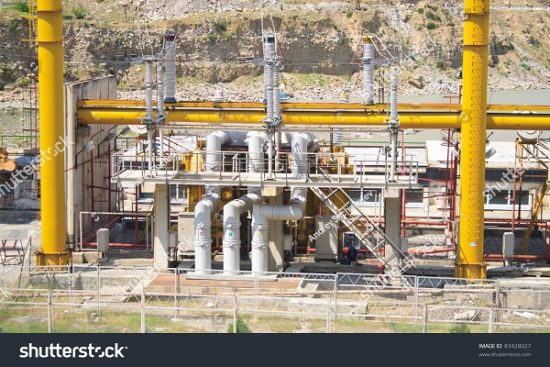
This course discusses the high-voltage system in hydroelectric power plants which includes equipment and conductors that carry current at transmission line-voltage, with their insulators, supports, switching equipment, and protective devices. The system begins with the high-voltage terminals of the step-up power transformers and extends to the point where transmission lines are attached to the switchyard structure. High-voltage systems include those systems operating at 69 kV and above, although 34.5-kV and 46-kV systems that are subtransmission-voltage systems are also covered in this discussion. Course Outline 1. POWER TRANSFORMERS 2. ELECTRICAL CHARACTERISTICS 3. HIGH VOLTAGE SYSTEM This course will give electrical engineers and other design and construction professionals an introduction to the design, construction and safety considerations for high voltage systems in hydroelectric power plants
Learning Objectives
At the successful conclusion of this course, you’ll be able to identify and discuss:- Learn about three-phase transformers used for generator step-up;
- Learn how to employ forced air cooling systems for transformers;
- Learn about FOA Class transformers;
- Learn about basic impulse insulation levels;
- Learn how to safely design low-voltage leads between the transformer and generator;
- Learn about oil preservation systems; and
- Learn the importance of online dissolved gas monitoring systems.
ACCEPTANCE GUARANTEE
Ncite Engineering Hub engineering courses & live webinars meet NCEES Guidelines for Professional Engineer licenses renewal in all 50 states.

Live Webinars satisfy strict “Live Contact Hour” state mandates.
100% money-back State Board Acceptance Guarantee
Ncite Engineering Hub will refund your payment if the PDH credits you earn are rejected by your state board for any reason.
Ethics Courses

E – 1756 Engineering Ethics and Responsible Chargeby Mr. D. Allen Hughes, PE

E – 2052 Ethics – When Engineering is a Threat to National Securityby Mr. Don Parnell, PE

E – 1861 Indiana Statutes and Rules for Professional Engineers 2020-2022 Bienniumby Mark P. Rossow, PhD, P.E.

E – 1424 – Pennsylvania Laws and Board Rules for Professional Engineersby Mr. D. Allen Hughes, PE
Once completed, your order and certificate of completion will be available in your profile when you’re logged in to the site.