

• No products in the cart.

Profile Photo

No data found for Custom Course Number

No data found for Custom Course Units

$75.00

Profile Photo
$75.00

Intended Audience: Electrical and Design Engineers.

PDH UNITS: 3

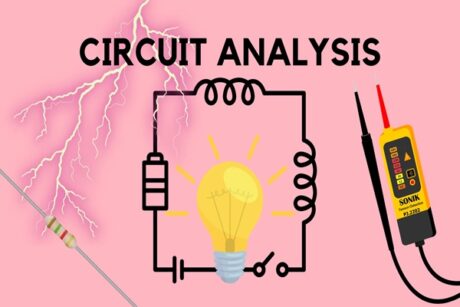
This 3-hour will establish, through slides and discussions, different aspects of the Direct Current (DC) circuit analysis.  The discussions start with the basic law of electrical circuits known as Ohm’s Law and covers its application to calculation of equivalent resistance of series / parallel circuits.  Conversion of delta-connected (wye-connected) combination of resistors to wye-connected (delta-connected) combination are covered.  The webinar then moves on to explanation of the two most fundamental laws of circuit analysis: Kirchhoff’s Voltage and Kirchhoff’s Current Laws (Also known as KVL and KCL).  Two fundamental theorems of network theory known as Thevenin’s Theorem and its dual known as Norton’s Theorem are covered.  These theorems allow the analyst to simplify circuits and focus on the elements of the circuit that are most relevant to the task at hand.  Next the power consumption of resistive loads are covered as well as conditions for maximum power transfer to these loads.

Two classical methods of circuit analysis known as Loop Circuit Analysis Method and Node Circuit Analysis Method are explained. Loop method relies on designating loop currents for the simple loops of the circuit, writing the KVL for each loop, and finally solving the multiple equations to find the loop currents.  The loop currents are then used to determine the branch currents of the circuit as well as component voltages as needed.

The Node method on the other hand identifies the principal nodes of the circuit, assigns node voltage to each, and through wiring KCL for each node, creates multiple equations in terms of the node voltages.  Solution of these node voltages allows determination of the branch currents and voltages of the branch components.  Each topic is followed by an adequate number of examples that are solved and explained step by step.

This course is intended for electrical engineers, as well as design personnel who are interested in learning fundamentals of electrical circuit theory.  Although the focus of this course is on DC circuits, almost all laws, theorems and principles covered here have their dual application to AC circuits.  As such this webinar, in addition to being a good course of study of DC circuits, can also serve as a necessary introduction for those participants who are interested in taking a course in AC Circuit Analysis.

Learning Objectives:

At the successful conclusion of this course, you will learn the following knowledge and skills:
  • Understand the fundamental laws, principles and equations governing DC electrical circuits and components
  • Apply the above knowledge and skills to analyze simple to progressively more complex electrical circuits
  • Find the voltage across and current through any element or branch of circuits
  • Analyze DC circuits of arbitrary complexity using the Thevenin’s and / or Norton’s Theorems
  • Apply above theorems to transformation of sources of power in circuits as needed
  • Apply superposition principle to break up a complex circuit into several simpler constituent circuits to make the task of circuit analysis more manageable
  • Calculate the power consumption of a network of resistive loads
  • Determine the conditions for maximum power transfer to resistive loads
  • Use Kirchhoff’s Voltage and Current Laws (KVL and KCL) as needed in implantation of comprehensive methods of circuit analysis
  • Apply the loop method of circuit analysis to find the branch currents and voltages of general electrical circuits
  • Solve simultaneous equations in connection with the methods of circuit analysis introduced in this webinar
  • Apply the node method of circuit analysis to find the node voltages and branch currents and voltages of general electrical circuits.

Course No E - 3144
PDH Units: 3
Copyright 2025 · All Rights Reserved. Ncite Engineering Hub, LLC 513 E- Main Street # 981 Charlottesville, VA 22902 USA