




No data found for Custom Course Number
No data found for Custom Course Units
Intended Audience:: Electrical Engineers
Credits: 2 PDH Units
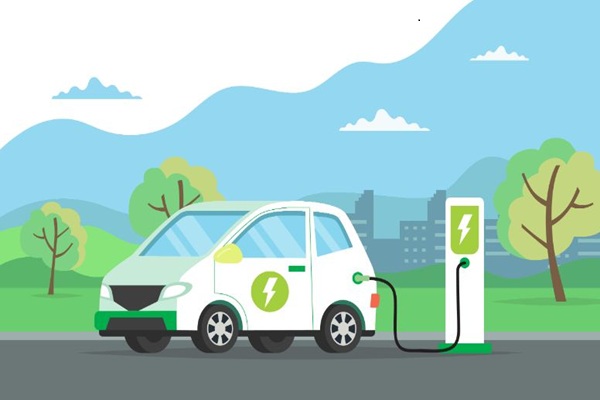
There are currently approximately 6 million electric vehicles (not counting the electric bicycles, scooters, unicycles and other non-automobile transportation devices) on the road in the United States and it is projected that by 2035, this number will increase to over 78.5 million. [1] Since more than 280 million vehicles are presently registered in the United States, if the present trend in EV purchase continues until 2045, the entire fleet of vehicles could be replaced with EVs. One might initially be concerned about any negative effects this transition might have on the electrical grid, but, in fact, the positive effects will likely outweigh any negative effects.
The goal of this course will be to demonstrate how the adoption of EVs and incorporation of them in a V2G (Vehicle to Grid) manner can result in an overall positive contribution to the modern electrical grid.
Currently, most EVs on the road only USE electricity from the grid. However, the V2G scenario is based upon addition of an inverter in order to convert stored energy in the vehicle batteries back to AC that can be returned to the grid when the grid needs it. This presentation will summarize the existing and planned storage mechanisms that will be needed to maintain grid reliability and show the significant contribution that can be made by V2G. Topics to be covered include:
- A summary of projected increase in EVs in the United States.
- Storage terminology (kW, kWh, lifetime cycles, etc.)
- A summary of projected future electrical power and energy supplies.
- A summary of projected implementation of renewable resources.
- A summary of anticipated types of storage that will be needed for grid reliability.
- A summary of hardware, codes and standards already in place that relate to V2G.
- A scenario of a possible build-out of a renewable plus storage grid.
- An economic analysis of the deployment of carbon dioxide free transportation and electrical generation sectors.
References:
- Edison Electric Institute, Electric Vehicle Sales and the Charging Infrastructure Required Through 2035 Edison Electric Institute, October 2024 Electric Vehicle Sales and the Charging Infrastructure Required Through 2035.
- Five-year US load growth forecast surges 456%, to 128 GW: Grid Strategies | Utility Dive
- www.eia.gov/aeo
- https://www.nrel.gov/analysis/storage-futures.htm
- https://acore.org/resources/u-s-energy-storage-market-primed-for-growth/ American Council on Renewable Energy
- https://www.statista.com/statistics/504369/electric-power-sector-capacity-in-the-us-forecast/
- https://www.pv-magazine.com/2022/01/24/us-zero-carbon-future-would-require-6twh-of-energy-storage/
- How Many Cars Are in the U.S.? 2025 | ConsumerAffairs®
- https://www.qualitylogic.com/knowledge-center/communications-protocols-for-grid-ev-integration/
Learning Objectives
At the successful conclusion of this course, you’ll be able to identify and discuss:- What are the projections for overall electrical kW & kWh increase and renewable kW & kWh increase?
- What are the projections for storage kW and kWh requirements?
- What hardware is needed to implement V2G?
- What communications will be needed for successful implementation of V2G?
- How will V2G compliment other proposed and existing means of electrical storage?
- What will it cost to transition to carbon-dioxide free transportation and electrical generation?
- What will it cost if we do NOT transition to a carbon-dioxide free society?
ACCEPTANCE GUARANTEE
Ncite Engineering Hub engineering courses & live webinars meet NCEES Guidelines for Professional Engineer licenses renewal in all 50 states.

Live Webinars satisfy strict “Live Contact Hour” state mandates.
100% money-back State Board Acceptance Guarantee
Ncite Engineering Hub will refund your payment if the PDH credits you earn are rejected by your state board for any reason.

Ethics Courses

E – 1322 – Indiana Statutes and Rules Applicable to the Practice of Professional Engineeringby Mark P. Rossow, PhD, P.E.

E – 2020 Engineering Ethics — Case Studies in Fraudulent Safety Claimsby Mark P. Rossow, PhD, P.E.

E – 1736 Ethics and the Engineer – Food for Thoughtby Professor Roger Messenger, Ph.D., P.E.

E – 1982 Illinois Statutes and Rules for Structural Engineeringby Mark P. Rossow, PhD, P.E.
Once completed, your order and certificate of completion will be available in your profile when you’re logged in to the site.
Course No E - 3145
PDH Units: 2