



No data found for Custom Course Number
No data found for Custom Course Units
Intended Audience: mechanical and electrical engineers concerned with the design and maintenance of uninterruptible power supply (UPS) systems
PDH UNITS: 1
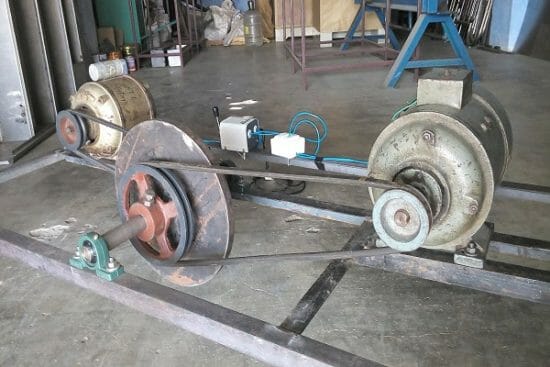
In a flywheel, energy is stored by causing a disk or rotor to spin on its axis. Advances in power electronics, magnetic bearings, and flywheel materials coupled with innovative integration of components have resulted in direct-current flywheel energy-storage systems that can be used as a substitute or supplement to batteries in uninterruptible power supply (UPS) systems. Although generally more expensive than batteries in terms of first cost, the longer life, simpler maintenance, and smaller footprint of the flywheel systems makes them attractive battery alternatives. This course describes flywheel technology, its variations, and installation requirements. Next a description is given of the market for flywheels, advice for choosing appropriate applications, and descriptions of the experiences of several users. One application is highlighted as a case study, followed by an illustrative life-cycle cost comparison of batteries and flywheels. This course is based on the DOE publication, “Flywheel Energy Storage,” a New Technology Demonstration Publication, DOE/EE-0286, part of the Federal Energy Management Program and produced by the Pacific Northwest National Laboratory, September, 2003.
Learning Objectives
- Potential use anywhere batteries are currently used in UPS systems
- Advantages compared to batteries
- Low speed versus high speed flywheels
- Improved UPS system reliability and reduced life-cycle costs
- Examples of successful flywheel currently in use
ACCEPTANCE GUARANTEE
Ncite Engineering Hub engineering courses & live webinars meet NCEES Guidelines for Professional Engineer licenses renewal in all 50 states.
Live Webinars satisfy strict “Live Contact Hour” state mandates.
100% money-back State Board Acceptance Guarantee
Ncite Engineering Hub will refund your payment if the PDH credits you earn are rejected by your state board for any reason.

Ethics Courses

E – 1869 Engineering Ethics: “Avoid Deceptive Acts” and the Case of MacArthur Maze Fire Collapseby Dr. Abolhassan Astaneh-Asl, Professor Emeritus. Ph.D., PE

E – 1772 Engineering Ethics: “Hold Safety Paramount” to Prevent Loss of Lifeby Dr. Abolhassan Astaneh-Asl, Professor Emeritus. Ph.D., PE

E – 1725 Ethical Behavior;The 2005 Taum Sauk Dam Breachby Mark P. Rossow, PhD, P.E.

[Live Webinar] Engineering Ethics: Baltimore Ship and Bridge Collision; Ethics Violation Caused Six Deathsby Dr. Abolhassan Astaneh-Asl, Professor Emeritus. Ph.D., PE
Once completed, your order and certificate of completion will be available in your profile when you’re logged in to the site.