


No data found for Custom Course Number
No data found for Custom Course Units
Intended Audience: Power & Electrical Engineers
PDH UNITS: 1
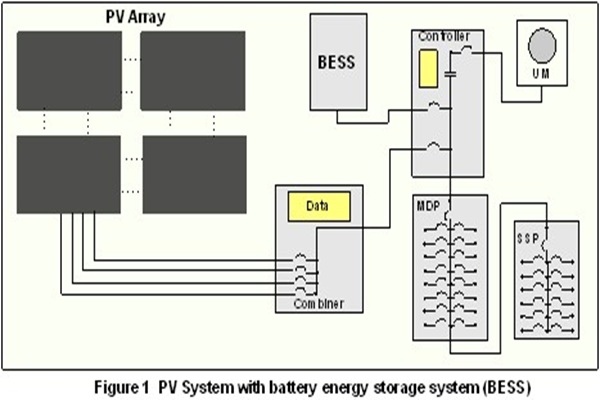
This 1-credit course explains the details of virtual power plants and the role of the engineer in cost-effective implementation of them. Virtual power plants are a form of distributed power generation that takes advantage of the cost-effectiveness of localized renewable energy sources and localized battery energy storage systems on stabilizing the electrical grid. The course explores the customer and utility side of this idea, which is gaining popularity in many areas.
Course Outline
- What is a virtual power plant?
- What is the difference between a virtual power plant and a battery-backup system?
- Why are virtual power plants important?
- Examples of virtual power plant systems with and without localized renewables.
- Economics of virtual power plants.
- Non-technical Issues associated with virtual power plants.
Learning Objectives
At the successful conclusion of this course, you’ll be able to identify and discuss:- Understand some of the utility challenges that are contributing to grid instability.
- Understand why virtual power plants offer a solution for power grid stability that provides a win for the customer, a win for the utility, a win for the engineer and a win for the planet.
- Understand the details of how a virtual power plant operates: design, components and communications from user side and utility side.
- Understand how security and redundancy issues need to be considered.
- Learn how electric vehicles can become part of the solution for grid stability.
- Learn of the non-technical issues involved with VPPs that need to be overcome for large-scale adoption.
Author
Roger Messenger, PhD, PE, is Professor Emeritus of Electrical Engineering at Florida Atlantic University. He has been involved in research in energy efficiency and renewable energy since the OPEC oil embargo more than 50 years ago. He was a member of the team that wrote the first Florida Code for Energy Efficiency in Building Construction and conducted seminars for contractors and building officials on this material statewide. His recent interests have focused on engineering solutions to climate change, one of which is virtual power plants. In addition, he has done final review for over 8,000 residential PV systems since 2020. He is the principal author of Photovoltaic Systems Engineering, an engineering textbook, now in its 5th edition. He specializes in presenting material in an understandable manner, which has earned him a number of teaching awards, including Florida Atlantic University Distinguished Teacher of the Year.
ACCEPTANCE GUARANTEE
Ncite Engineering Hub engineering courses & live webinars meet NCEES Guidelines for Professional Engineer licenses renewal in all 50 states.

Live Webinars satisfy strict “Live Contact Hour” state mandates.
100% money-back State Board Acceptance Guarantee
Ncite Engineering Hub will refund your payment if the PDH credits you earn are rejected by your state board for any reason.

Ethics Courses

E – 1861 Indiana Statutes and Rules for Professional Engineers 2020-2022 Bienniumby Mark P. Rossow, PhD, P.E.

E – 1950 Engineering Ethics: The Citicorp Tower Wind Retrofit-An Excellent Example of Ethical Conduct of Structural Engineersby Dr. Abolhassan Astaneh-Asl, Professor Emeritus. Ph.D., PE

[Live Webinar] Engineering Ethics: Baltimore Ship and Bridge Collision; Ethics Violation Caused Six Deathsby Dr. Abolhassan Astaneh-Asl, Professor Emeritus. Ph.D., PE

E – 1316 – Engineering Ethics Case Study: The Taum Sauk Reservoir Failureby Mark P. Rossow, PhD, P.E.
Once completed, your order and certificate of completion will be available in your profile when you’re logged in to the site.
Course No E - 3154
PDH Units: 1