





• No products in the cart.

Profile Photo

No data found for Custom Course Number

No data found for Custom Course Units

$50.00
$50.00

Intended Audience:for Structural and project Engineers

PDH UNITS: 2

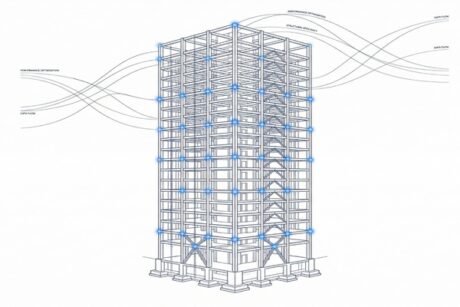
This professional development course introduces structural engineers to the transformative applications of generative artificial intelligence for structural system selection. Participants will learn how machine learning algorithms and evolutionary optimization can systematically evaluate thousands of design alternatives, identify optimal structural solutions balancing multiple competing objectives, and enhance design quality while improving project economics and sustainability performance.

The course examines fundamental structural systems including gravity and lateral force-resisting systems, explains the algorithmic foundations of generative AI including genetic algorithms and neural networks, and provides practical guidance on integrating these tools into structural engineering workflows. Engineers will understand both the capabilities and limitations of AI-assisted design, enabling responsible deployment while maintaining professional judgment and quality assurance essential for structural engineering practice.

Who Should Take This Course

This course is designed for structural engineers, project managers, firm principals, and design professionals interested in understanding and implementing generative AI technologies for structural system selection. The course is appropriate for engineers at all career stages, from recent graduates seeking to understand emerging technologies to experienced practitioners evaluating AI integration strategies for their firms.

Learning Objectives:

At the successful conclusion of this course, you will learn the following knowledge and skills:
  • Explain how generative AI transforms structural system selection from analyzing engineer-specified alternatives to algorithmically generating and evaluating thousands of design options, and describe the benefits including expanded solution discovery, quantified performance tradeoffs, and reduced selection risk.
  • Compare fundamental characteristics, advantages, limitations, and typical applications of primary gravity systems including steel beam and girder systems, composite floor systems, concrete flat plates, flat slabs with drop panels, post-tensioned systems, and concrete joist systems.
  • Evaluate performance characteristics of lateral force-resisting systems including moment-resisting frames, braced frames, shear walls, dual systems, outrigger systems, and tubular systems, considering architectural integration, cost, construction schedule, and seismic performance.
  • Describe how evolutionary algorithms and genetic optimization work for structural system selection, including chromosome encoding, fitness evaluation, multi-objective optimization using Pareto frontiers, and constraint handling approaches.
  • Explain how machine learning enables rapid performance prediction through supervised learning, neural network architectures, transfer learning, and uncertainty quantification, and understand training data requirements for reliable ML model development.
  • Describe hybrid AI approaches including ML-accelerated evolutionary optimization, reinforcement learning for design strategy, generative adversarial networks, topology optimization integration, and physics-informed neural networks.
  • Integrate generative AI tools into structural engineering project workflows at the conceptual design phase, including defining input parameters, configuring objective functions, interpreting results, and filtering alternatives for detailed consideration.
  • Implement validation and quality assurance protocols for AI-generated structural system recommendations including independent verification analysis, code compliance verification, constructability review, benchmark comparisons, and sensitivity analysis.
  • Communicate AI-assisted structural system recommendations effectively to project stakeholders through visualization of alternatives, explanation of AI methodology, cost-benefit analysis presentation, and documentation of selection processes.
  • Evaluate future directions for generative AI in structural practice including integrated multi-disciplinary optimization, real-time design feedback, learning from construction outcomes, and understand professional practice implications for engineering education, standard of care, and ethical responsibilities.

Course No E - 3109
PDH Units: 2
Copyright 2025 · All Rights Reserved. Ncite Engineering Hub, LLC 513 E- Main Street # 981 Charlottesville, VA 22902 USA