This online engineering PDH course provides comprehensive knowledge and advanced methodologies for implementing artificial intelligence in structural analysis and design optimization, covering machine learning algorithms, neural networks, and AI-powered tools that are transforming how structural engineers approach analysis, design, and lifecycle management of civil infrastructure.
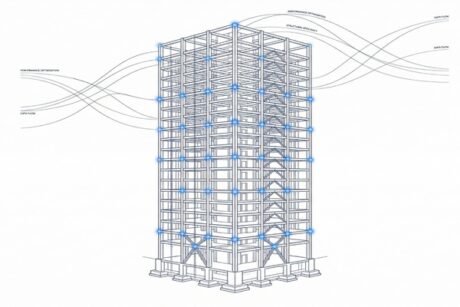
Artificial intelligence is fundamentally reshaping structural engineering practice by enabling unprecedented capabilities in computational analysis, design optimization, and structural health monitoring. Through detailed examination of theoretical frameworks and practical applications, engineers will master how AI technologies including neural networks, deep learning, and surrogate modeling can accelerate finite element analysis, optimize structural topology and member sizing, predict performance under extreme loads, and enable real-time structural health monitoring. The course covers essential AI concepts specifically tailored for structural applications, including data requirements for training models, integration with industry-standard software like SAP2000 and ETABS, validation protocols for AI-assisted designs, and implementation strategies considering professional liability and code compliance. Detailed case studies demonstrate successful AI deployment in high-rise building optimization, bridge design and monitoring, long-span structures, topology optimization achieving 20-40% material reductions, predictive maintenance through digital twins, and multi-objective optimization balancing structural performance, cost, and sustainability.
This PDH online course is applicable to structural engineers, civil engineers, and design professionals who are ready to advance beyond basic AI awareness to practical implementation of AI-powered structural analysis and optimization in their projects. The course is particularly valuable for engineers seeking to leverage generative design and topology optimization, integrate AI with finite element analysis workflows, implement structural health monitoring systems, optimize designs for sustainability and lifecycle performance, and lead their firms' adoption of AI technologies while maintaining professional standards and code compliance.
Learning Objectives:
At the successful conclusion of this course, you will learn the following knowledge and skills:
- Understanding fundamental AI concepts for structural engineering, including machine learning algorithms, neural network architectures, deep learning methodologies, and their specific applications in structural analysis, design optimization, and performance prediction
- Mastering AI-powered structural analysis techniques, including load prediction models, nonlinear behavior modeling, surrogate modeling for accelerating finite element analysis, and performance assessment under extreme events such as earthquakes, wind, blast, and fire
- Implementing topology optimization and generative design algorithms to achieve 20-40% material reductions while maintaining structural performance, including AI-driven member sizing, shape optimization, and multi-objective optimization balancing cost, performance, and sustainability
- Developing structural health monitoring systems using AI for real-time damage detection, crack and corrosion identification through computer vision, vibration-based anomaly detection, predictive maintenance, and digital twin creation with BIM integration
- Integrating AI tools and platforms into structural engineering workflows, including commercial software (Autodesk, ANSYS, Bentley), open-source libraries (TensorFlow, PyTorch, OpenSeesPy), and APIs for SAP2000, ETABS, and STAAD.Pro
- Applying AI methods to diverse structure types including high-rise buildings, bridges, long-span roofs, offshore platforms, and special structures, with emphasis on practical optimization strategies and real-world case studies
- Establishing validation protocols, documentation standards, and quality control procedures for AI-assisted designs to ensure code compliance, professional liability protection, and regulatory acceptance
- Evaluating emerging AI technologies, implementing organizational roadmaps for AI adoption, developing required competencies through training programs, and addressing ethical considerations in AI-enhanced structural engineering practice