


No data found for Custom Course Number
No data found for Custom Course Units
Intended Audience: mechanical, civil, and transportation engineers concerned with the design and maintenance of lighting systems for buildings,
PDH UNITS: 3
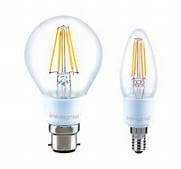
LEDs (Light-Emitting Diodes) are semiconductor devices that emit light through electroluminescence. This basic fact is the foundation for many of the advantages of LEDs, since the source of LED light is different from traditional light sources. Some of the potentially favorable characteristics of LEDs compared to traditional lamps include directional light emission, wide size and form factor choice, resistance to mechanical failure (i.e., breaking), instant “on” at full output, rapid on-off cycling capability without detrimental effects, improved performance at cold temperatures, dimming and control capability, opportunity for color tuning, minimal nonvisible radiation [e.g., ultraviolet (UV), infrared (IR)], and extended lifetime. But even though LEDs have advantages over traditional lamps, generalized comparisons are often misrepresentative. For example, no matter how much energy can be saved using an LED, if the product does not meet all the performance requirements of a given application, it is not a good design choice. This course describes the characteristics of LEDs and discusses situations where LEDs would be appropriate and other situations where traditional light sources should be chosen instead. Health and safety issues of LEDs are also discussed. This course is based on a compilation of fact sheets from the U.S. Department of Energy Office of Energy Efficiency & Renewable Energy (http://energy.gov/eere/ssl/led-basics), April, 2016.
Learning Objectives
At the successful conclusion of this course, you’ll be able to identify and discuss:- Learning about energy efficiency of LEDs
- Using LEDs to their best advantage
- Knowing how to establishing LED equivalency
- Knowing about LED lifetime and reliability characteristics
- Understanding the characteristics of general service LED lamps
- Learning about optical safety of LEDs
- Knowing about aspects of lighting related to health
- Understanding flicker
ACCEPTANCE GUARANTEE
Ncite Engineering Hub engineering courses & live webinars meet NCEES Guidelines for Professional Engineer licenses renewal in all 50 states.

Live Webinars satisfy strict “Live Contact Hour” state mandates.
100% money-back State Board Acceptance Guarantee
Ncite Engineering Hub will refund your payment if the PDH credits you earn are rejected by your state board for any reason.

Ethics Courses

Webinar: A Closer Insight into Workplace Ethics & Professional Conductby Dr. David Williams. PhD, PE, PH, CFM, F.ASCE, CPESC, D.WRE

E – 1980 Engineering Ethics—Case Studies in Espionageby Mark P. Rossow, PhD, P.E.

E – 1703 Handling Ethical Issues in Professional Engineering Practice in FLby Mr. Joseph Chaiban, P.E., SI.JD.

E – 1756 Engineering Ethics and Responsible Chargeby Mr. D. Allen Hughes, PE
Once completed, your order and certificate of completion will be available in your profile when you’re logged in to the site.


E - 1133 Energy Conservation in Industrial and Commercial Environment