


No data found for Custom Course Number
No data found for Custom Course Units
Intended Audience: mechanical engineers and other infrastructure design and construction professionals
PDH UNITS: 3
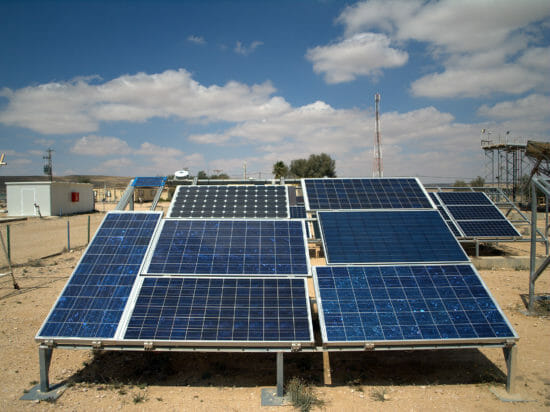
This course provides an introduction to solar energy system fundamentals. A solar thermal energy collection system (or "solar system" for short) is defined as a set of equipment that intercepts incident solar radiation and stores it as useful thermal energy to offset or eliminate the need for fossil fuel consumption. Four basic functions are performed by a typical solar system and are discussed in this course. Course Outline: INTRODUCTION SOLAR ENERGY APPLICATIONS BASIC MATERIAL CONSIDERATIONS IN SOLAR ENERGY SYSTEMS. COLLECTOR SUB-SYSTEM STORAGE SUB-SYSTEM TRANSPORT SUB-SYSTEM CONTROL SUB-SYSTEM SOLAR ENERGY SYSTEM PERFORMANCE SUMMARY
Learning Objectives
At the successful conclusion of this course, you’ll be able to identify and discuss:- Learn about the four basic functions performed by a typical solar system;
- Learn the components of the collector sub-system which intercepts incident solar radiation and transfers it as thermal energy to a working fluid;
- Learn about the elements of the storage sub-system which retains collected thermal energy for later use by the process load;
- Learn how the transport sub-system delivers energy from the collectors to storage;
- Learn how the control sub-system determines when enough energy is available for collection, and activates and controls the entire system to collect this energy until it is no longer available as a net energy gain;
- Learn about heating domestic hot water and low-temperature process water, which will normally be the most thermally efficient means of using solar energy;
- Learn the basic material considerations in solar energy systems; and
- >Learn about flat-plate solar collectors, which are the most common type used.
Course Reviews
5
- 5 stars2
- 4 stars0
- 3 stars0
- 2 stars0
- 1 stars0
ACCEPTANCE GUARANTEE
Ncite Engineering Hub engineering courses & live webinars meet NCEES Guidelines for Professional Engineer licenses renewal in all 50 states.

Live Webinars satisfy strict “Live Contact Hour” state mandates.
100% money-back State Board Acceptance Guarantee
Ncite Engineering Hub will refund your payment if the PDH credits you earn are rejected by your state board for any reason.

Ethics Courses

E – 1869 Engineering Ethics: “Avoid Deceptive Acts” and the Case of MacArthur Maze Fire Collapseby Dr. Abolhassan Astaneh-Asl, Professor Emeritus. Ph.D., PE

E – 1667 Ins and Outs of Professional Conduct & Workplace Ethicsby Dr. David Williams. PhD, PE, PH, CFM, F.ASCE, CPESC, D.WRE

E – 1207 – Ethical Issues from the St. Francis Dam Failureby Mr. J. Paul Guyer, P.E., R.A.

E – 1980 Engineering Ethics—Case Studies in Espionageby Mark P. Rossow, PhD, P.E.
Once completed, your order and certificate of completion will be available in your profile when you’re logged in to the site.


Great coarse! Well thought out and easy to follow. Provided useful information.
This is one of those courses that has application in your day-to-day life. All of us would like to drive down our utility costs and this course provides useful insight into solar energy systems for use in heating “service water” (hot water for your house). Course provides the right balance of information and detail to provide the student with sufficient insight into this type of system.