SLT, DLT, PIT, CSL and BSLT with Guyana Case Histories
This practical presentation explains how pile testing is used to reduce geotechnical and construction risk, verify pile performance, detect pile damage and calibrate design assumptions. The course starts with the main pile testing methods, then develops two major Guyana case histories: the Demerara Bridge foundations and the Georgetown GNL Thermoelectric Project.
Program structure
Part 1 – Pile testing fundamentals
Static load tests (SLT), dynamic load tests (DLT), pile integrity tests (PIT), crosshole sonic logging (CSL), bidirectional static load tests (BSLT), load measurement, reaction systems, driving stresses, Capwap calibration and pile damage detection.
Part 2 – Demerara Bridge foundations
Geology of the Demerara River deposits, site investigation, SPT/CPTU/VST interpretation, bored pile construction, pile capacity prediction by AASHTO and Spile, sonic crosshole testing, bidirectional static tests and comparison between predicted and measured behavior.
Part 3 – Georgetown GNL Thermoelectric Project
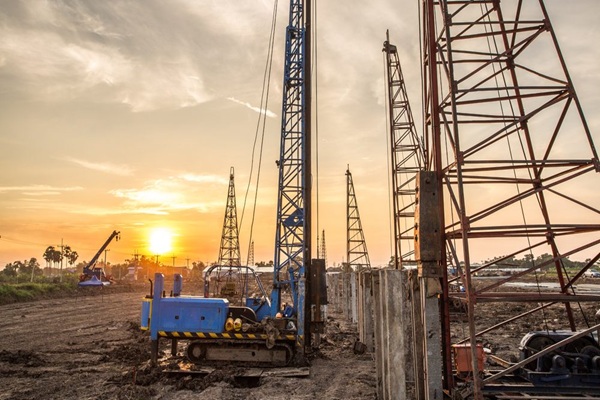
Steel pipe and centrifuged spun concrete piles, static and dynamic testing programmes, van der Veen extrapolation, Capwap calibration, soil set-up, driving stresses, tensile and lateral load testing, pile damage and coupler-related failures.
Who should attend?
The webinar is intended for geotechnical engineers, structural engineers, foundation designers, piling contractors, testing engineers, site supervision teams, owners, regulators, technical managers, engineering geologists, geotechnical technicians and advanced students involved in piled foundation design, construction or verification.
Course emphasis
The presentation is practical and case-history based. It focuses on interpretation, testing strategy, construction quality control, comparison between predicted and measured behaviour, and the prevention of pile damage through correct testing and monitoring.
Date: Wednesday July 1st, 2026 . 2 - 4 pm ET
Credits: 2 PDH Units
Learning Objectives
On successfully completing the quiz associated with this presentation, the attendee will be able to address the following knowledge and skills:
- Select the appropriate pile test for capacity verification, serviceability assessment, construction control or integrity assessment.
- Recognize the strengths and limitations of SLT, DLT, PIT, CSL and BSLT.
- Interpret load-settlement curves and understand ultimate load extrapolation using the van der Veen method.
- Understand why DLT/Capwap results must be calibrated against static load tests, preferably on the same pile.
- Assess driving stresses and distinguish acceptable driving behavior from pile damage or splice/coupler failure.
- Relate site investigation, geology and construction method to foundation design decisions in soft clay environments.
- Use case histories to identify practical QA/QC requirements for large bored piles, steel driven piles and concrete driven piles.
Special Webinar Instructions
After payment, please visit this webinar page, click “Start Course” and fill out the Webinar Registration Form. You’ll receive email notification and details on how to join the webinar. You will then be able to access the webinar slides, test your system and receive webinar reminders. After completing the webinar requirements, your certificate of completion will be saved and available for download in your profile.
We value your feedback! Please rate this webinar after completion
Group Discounts Available
Instructor Bio:
Alberto Ortigao, PhD, FICE, CEng (UK), PE (US) is an experienced geotechnical consultant with a career spanning over five decades. His expertise encompasses many projects, including tailings and water dams, slopes, embankments, foundations, excavations, structures, and tunnels.
A Fellow and Chartered Engineer of the Institution of Civil Engineers, London and a Professional Engineer in the USA, Dr Ortigao earned his Bachelor of Science in Civil Engineering from the Federal University of Rio de Janeiro (UFRJ) in 1971, followed by a PhD in 1980. He combined a successful academic career at UFRJ (1978-2003) with industry experience as a researcher at the Building Research Establishment, UK (1982-1984) and offshore foundation designer at Fugro UK Ltd.
His international career has included visiting professorships at UBC, City University of Hong Kong, and the University of Western Sydney, as well as projects across South America, the UK, US, Canada, Hong Kong, Malaysia and northern Africa. This global exposure has cultivated fluency in English, Spanish, German, Portuguese, and French.
Dr. Ortigao is a prolific author with over one hundred technical papers. His expertise is further reflected in his published works: Soil Mechanics in the Light of Critical State Theories (Balkema, 1995) and Handbook of Slope Stabilization (Springer Verlag, Heidelberg, 2004).








Great course. Nice presentation
i like it , very good
Gained knowledge in the testing of various pile types