
• No products in the cart.

Profile Photo

No data found for Custom Course Number

No data found for Custom Course Units

$25.00
$25.00

Intended Audience:: Construction, and Building Engineers

PDH UNITS: 1

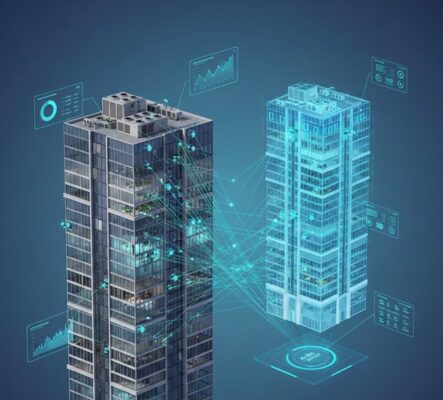
The convergence of digital modeling, sensor technology, and building automation has given rise to digital twin technology—one of the most transformative innovations in facility management. Digital twins create virtual representations of physical building assets connected through real-time data streams, enabling unprecedented visibility into building operations and creating opportunities for optimization that were previously impossible. This comprehensive course introduces building professionals to the technical foundations, implementation strategies, and practical applications of digital twin integration with building management systems.

By completing this course, you will gain practical insights into how digital twin platforms integrate with BMS infrastructure to enable data-driven decision making and proactive management strategies. Research by McKinsey Global Institute indicates that digital twin technology can reduce building operating costs by 10 to 25 percent while improving energy efficiency by 15 to 30 percent. The Construction Industry Institute reports that facilities leveraging digital twins for operations and maintenance experience 20 to 30 percent reductions in unplanned downtime and 25 to 35 percent improvements in maintenance labor productivity.

This course bridges the gap between operational technology and information technology, examining data architecture, sensor networks, interoperability standards, and security considerations essential for successful integration. You will learn practical approaches to energy optimization, predictive maintenance, occupant comfort management, and emergency response applications enabled by integrated digital twin systems. Whether you are a facility manager, building engineer, controls specialist, or technology professional, this course will equip you with the knowledge needed to evaluate, implement, and leverage digital twin integration for improved building performance.

Learning Objectives:

At the successful conclusion of this course, you will learn the following knowledge and skills:
  • Define digital twin technology in the built environment context and explain how it differs from static BIM models through continuous real-time data exchange, describing the evolution from CAD through BIM to operational digital twins.
  • Describe the business case for digital twin integration including energy cost reduction, maintenance optimization, space utilization improvement, and operational efficiency gains, with quantified benefits from industry research.
  • Explain data architecture requirements for digital twin platforms including semantic web approaches such as Brick schema and Project Haystack, time-series databases, and data lake architectures for building applications.
  • Identify sensor network technologies including traditional BMS sensors and IoT devices, and describe edge computing approaches that enable local data processing and reduce latency for real-time applications.
  • Describe cloud computing platforms for digital twin implementation including Microsoft Azure Digital Twins and AWS IoT TwinMaker, and explain hybrid architectures that balance cloud scalability with on-premises control.
  • Explain BMS architecture including field, automation, and management levels, and describe communication protocols such as BACnet, Modbus, and MQTT used for data exchange between BMS and digital twin platforms.
  • Implement real-time synchronization strategies including polling-based and publish-subscribe approaches, and describe time synchronization requirements for accurate correlation of data from distributed systems.
  • Apply security best practices for BMS-digital twin integration including network segmentation, encryption, access control, and compliance with cybersecurity frameworks such as NIST.
  • Describe digital twin applications for energy optimization, predictive maintenance, occupant comfort management, and emergency response, with implementation examples and quantified performance outcomes.
  • Evaluate emerging technologies including artificial intelligence integration, augmented reality for facility management, and autonomous building operations, and identify industry standards developments shaping future digital twin capabilities.

Course No E - 3118
PDH Units: 1
Copyright 2025 · All Rights Reserved. Ncite Engineering Hub, LLC 513 E- Main Street # 981 Charlottesville, VA 22902 USA