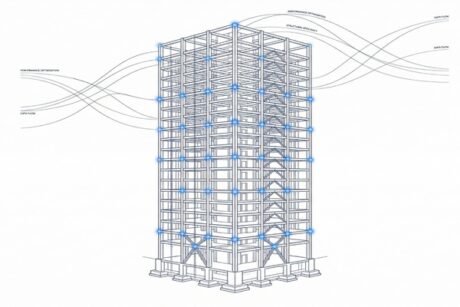
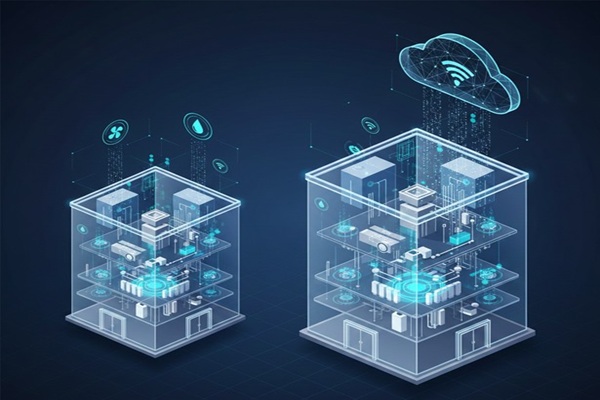
Digital twin technology is rapidly transforming how buildings are operated, maintained, and optimized, representing the most impactful shift in facility management since the rise of building automation systems. A digital twin is not just a model, but a living, continuously updated virtual replica of a building or asset that reflects real-world conditions in real time. Powered by live data and advanced analytics, digital twins enable owners and operators to understand performance, anticipate issues, and make smarter, faster decisions throughout a building’s lifecycle.
In this course, you will gain practical, real-world insight into how digital twins combine BIM geometry with operational data from building automation systems, IoT sensors, and maintenance platforms. You’ll explore how these integrated systems move beyond static design models to deliver actionable intelligence—supporting predictive maintenance, energy optimization, fault detection, and operational planning. With industry leaders projecting that the majority of new commercial buildings will adopt digital twin technology, understanding this shift is quickly becoming a competitive advantage rather than a future option.
Designed to bridge theory and implementation, the course focuses on the technologies, data workflows, and analytics that make digital twins valuable in day-to-day operations. You’ll learn how digital twins are used to reduce maintenance costs, minimize unplanned downtime, extend equipment life, and improve overall building performance. Ideal for facility managers, building engineers, energy managers, architects, and construction professionals, this course equips you with the knowledge needed to confidently evaluate, implement, and leverage digital twin solutions in today’s data-driven built environment.
Course Benefits
- Gain foundational knowledge in digital twin technology for building applications
- Learn practical implementation strategies from real-world case studies
- Understand sensor technologies and data integration approaches
- Develop skills in evaluating digital twin platforms and solutions
- Prepare for future building technology trends and emerging standards
- Enhance professional credentials with specialized knowledge
- Flexible learning format accommodates busy professional schedules.
Target Audience
This course is designed for:
- Facility managers and building operators
- Building engineers and energy managers
- Architects and design professionals
- Construction managers and general contractors
- Building automation professionals
- Smart building technology consultants
- Property managers and real estate professionals
Learning Objectives:
At the successful conclusion of this course, you will learn the following knowledge and skills:
- Define digital twin technology and explain how it differs from static Building Information Models (BIM), including the continuous evolution based on real-time operational data and the integration of geometric models with sensor networks.
- Describe the five-layer architecture of building digital twins including the physical layer, connectivity layer, data platform layer, analytics layer, and application layer, and explain how each layer contributes to overall system functionality.
- Identify IoT sensor technologies used in building digital twins including temperature, humidity, occupancy, air quality, and energy monitoring sensors, and explain deployment strategies and data collection capabilities.
- Explain building automation system integration approaches including BACnet and Modbus protocols, API-based data exchange, and strategies for connecting diverse building systems to digital twin platforms.
- Describe BIM integration methods including Industry Foundation Classes (IFC) standards, linking operational data to geometric models, and using point cloud data for existing building documentation.
- Explain predictive maintenance capabilities enabled by digital twins, including machine learning-based degradation analysis, Remaining Useful Life (RUL) estimation, and integration with computerized maintenance management systems.
- Describe energy optimization applications including Model Predictive Control (MPC), demand response integration, and measurement and verification approaches enabled by digital twin analytics.
- Explain automated fault detection and diagnostics (AFDD) methods including rule-based, machine learning, and physics-based approaches for identifying operational problems and energy waste.
- Develop implementation strategies for digital twin projects including use case identification, infrastructure assessment, pilot project selection, technology platform evaluation, and phased deployment approaches.
- Identify emerging trends including artificial intelligence advances, smart city integration, and developing standards such as ASHRAE Standard 223P that will shape future digital twin capabilities.