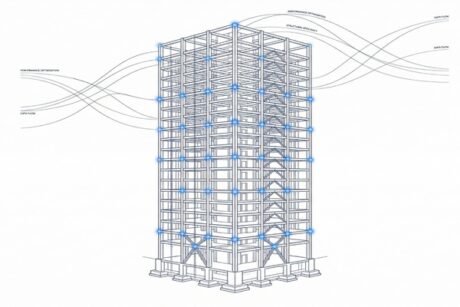
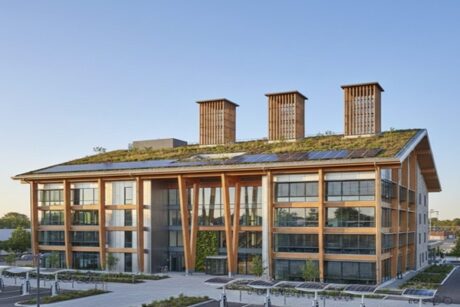
The facade does everything. It controls heat, light, structure, and comfort—all while defining how a building meets the world. Getting it right means balancing dozens of competing variables simultaneously. Getting it wrong means compromises that last the life of the building.
AI is making "right" dramatically more achievable.
Traditional facade design typically evaluates a handful of configurations before time and budget force a decision. Generative design tools powered by AI can evaluate over 10,000 configurations in hours—exploring solution spaces that human designers simply cannot navigate manually. The difference in outcomes is measurable: research published in Building and Environment shows AI optimization reducing facade-related energy consumption by 15 to 35 percent compared to conventional approaches.
This course unlocks that capability for your practice.
You'll learn how machine learning algorithms predict facade performance across thermal, daylighting, and structural metrics—delivering insights in seconds that would otherwise require hours of simulation per alternative. You'll explore how multi-objective optimization navigates the inherent tradeoffs between energy efficiency, daylight autonomy, glare control, material costs, and structural requirements to surface solutions that genuinely perform better across multiple criteria.
The course goes deep on advanced systems where AI adds the most value: adaptive facades that respond to changing conditions, building-integrated photovoltaics balancing energy generation with aesthetics, and smart glass technologies with complex control parameters. Case studies showcase real results—projects achieving BREEAM Outstanding certification with scores above 98 percent, developments cutting structural steel by 15 percent through optimization, and facades that perform beyond what conventional design processes could deliver.
For architects pushing building performance further, facade consultants developing next-generation solutions, or engineers responsible for envelope systems—this course provides the foundation to evaluate, specify, and implement AI-driven facade optimization with confidence.
Better facades are hiding in the solution space. AI finds them.
Learning Objectives:
At the successful conclusion of this course, you will learn the following knowledge and skills:
- Describe the evolution of facade design technology from traditional approaches through parametric design to current AI-enhanced optimization methods, and explain how artificial intelligence transforms the facade design process.
- Define artificial intelligence, machine learning, neural networks, and surrogate modeling, and explain how these technologies apply to facade performance prediction and optimization.
- Explain the fundamental physics of facade thermal performance including thermal transmittance, solar heat gain coefficient, air infiltration, and thermal bridging, and describe how AI systems optimize these parameters.
- Describe daylighting performance metrics including spatial daylight autonomy, annual sunlight exposure, and visible transmittance, and explain how AI optimization balances daylighting against thermal and glare considerations.
- Distinguish between genetic algorithms, particle swarm optimization, simulated annealing, and gradient-based methods, and identify appropriate applications for each in facade optimization.
- Explain the concept of Pareto optimality and multi-objective optimization, and describe how algorithms like NSGA-II identify tradeoff frontiers among competing facade performance objectives.
- Describe climate data analysis requirements for AI facade optimization including TMY data, solar radiation analysis, wind environment assessment, and microclimate modeling.
- Explain integration approaches connecting AI optimization with building performance simulation tools including EnergyPlus, Radiance, and OpenStudio, and describe the role of Ladybug Tools in parametric analysis workflows.
- Describe advanced facade technologies including adaptive kinetic systems, double-skin facades, building-integrated photovoltaics, and electrochromic glazing, and explain how AI enables effective design and control of these systems.
- Evaluate commercial AI facade optimization platforms and identify integration requirements with existing design workflows including BIM and parametric modeling environments.