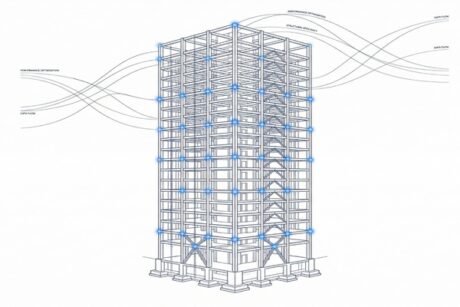
Infrastructure asset management represents one of the most critical challenges facing modern society. From transportation networks to water systems, power grids to public buildings, the effective management of infrastructure assets directly impacts economic productivity, public safety, and quality of life. The American Society of Civil Engineers estimates that the United States faces an infrastructure investment gap exceeding $2.6 trillion over the next decade, while simultaneously managing aging assets that were designed and built decades ago. This comprehensive course introduces civil engineers and infrastructure professionals to artificial intelligence applications that are transforming asset management practice, enabling data-driven, predictive, and optimized approaches that were impossible with traditional methods.
By completing this course, you will gain practical insights into how AI technologies address fundamental asset management challenges. Research demonstrates that AI-enabled predictive maintenance reduces maintenance costs by 20 to 30 percent, decreases equipment downtime by 30 to 50 percent, and extends asset service life by 20 to 40 percent compared to traditional preventive maintenance approaches. Computer vision systems using deep learning detect infrastructure defects with accuracy exceeding 95 percent while processing inspection data 60 percent faster than manual methods. Machine learning models predict asset failures 2 to 6 months in advance, enabling proactive intervention before costly failures occur.
This course bridges the gap between AI technology and practical infrastructure applications, examining how transportation agencies, utilities, facility managers, and other infrastructure owners successfully deploy AI systems to improve performance, reduce costs, and enhance public safety. Real-world case studies demonstrate measurable benefits including reduced maintenance costs, improved reliability, and extended asset service life achieved by organizations implementing AI-enhanced asset management systems.
Whether you are a civil engineer, asset manager, maintenance supervisor, public works director, or infrastructure consultant, this course will equip you with the knowledge needed to evaluate AI technologies, develop implementation strategies, and lead digital transformation initiatives within your organization. The course addresses practical considerations including sensor technologies and data collection, predictive maintenance using machine learning, computer vision for automated inspection, lifecycle optimization, risk assessment, and emerging technologies including digital twins and autonomous systems.>
Learning Objectives:
At the successful conclusion of this course, you will learn the following knowledge and skills:
- Explain fundamental concepts of infrastructure asset management including lifecycle stages, maintenance strategies, and performance optimization principles that provide context for AI applications.
- Describe how artificial intelligence and machine learning technologies including supervised learning, unsupervised learning, reinforcement learning, and deep neural networks apply to infrastructure asset management challenges.
- Identify sensor technologies including vibration sensors, thermal imaging, strain gauges, and chemical sensors used for condition monitoring, and explain how these technologies enable data-driven asset management.
- Explain how predictive maintenance using AI differs from reactive and preventive maintenance strategies, and quantify the cost reductions, downtime improvements, and service life extensions that predictive approaches enable.
- Describe computer vision applications for automated infrastructure inspection including defect detection, classification, and measurement using convolutional neural networks and semantic segmentation.
- Explain integration of drones, robots, and autonomous systems with AI for infrastructure inspection, including cost reductions and inspection frequency improvements these technologies enable.
- Apply lifecycle cost analysis enhanced by AI including probabilistic modeling, uncertainty quantification, and multi-objective optimization to infrastructure asset management decisions.
- Describe AI-based risk assessment approaches including failure prediction, consequence modeling, and anomaly detection that support risk-informed decision-making.
- Evaluate implementation strategies based on real-world case studies including bridge management, water distribution, and building systems applications demonstrating quantified benefits of AI deployment.
- Identify emerging technologies including digital twins, 5G connectivity, autonomous systems, and explainable AI that will shape future infrastructure asset management practice.