



No data found for Custom Course Number
No data found for Custom Course Units
Intended Audience: Safety, Mechanical & Building Design Engineer
PDH UNITS: 6
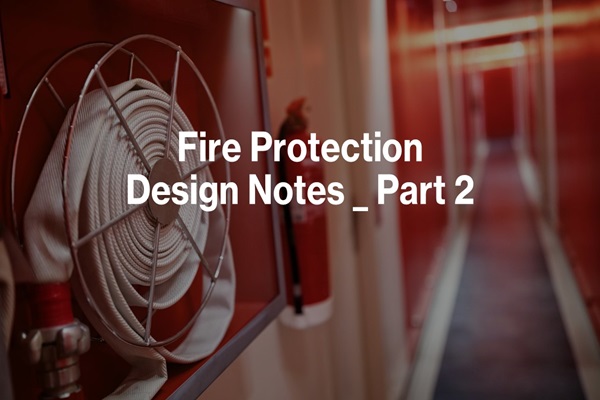
Fire safety is a critical discipline that integrates science, engineering, and practical applications to protect lives and property. This document offers an in-depth review of fire protection design, including the history of fire, fundamentals such as the fire triangle and tetrahedron, ignition sources, and combustion products. It also details fire alarm systems, firefighting agents, and automatic/manual suppression technologies. Furthermore, the notes discuss relevant design codes (NFPA, and international standards), project design steps, and real-world case studies. These elements form a reference for engineers and safety professionals seeking to design and implement effective fire protection systems.
Learning Objectives:
At the successful conclusion of this course, you will learn the following knowledge and skills:- Explain the fundamentals of fire, including its chemistry and modes of heat transfer.
- Differentiate between the fire triangle and fire tetrahedron.
- Identify various ignition sources and combustion products.
- Describe the components and functions of fire alarm systems.
- Compare manual and automatic initiating devices.
- Recognize different types of detectors (smoke, heat, flame, gas).
- Explain the principles of alarm notification and control systems.
- Classify firefighting agents (water, COâ‚‚, foam, dry/wet chemicals, halons, and substitutes).
- Distinguish between manual and automatic firefighting systems.
- Apply NFPA, and local standards in fire protection design.
- Analyze fire protection case studies and system designs.
- Develop project design steps including drawings, BOQs, vendor lists, and riser diagrams.
- Explain special requirements for alarm circuits and power supply considerations.
- Interpret system calculations for wet pipe, gas, and powder agent systems.
- Evaluate the role of emerging technologies in fire detection and suppression.
ACCEPTANCE GUARANTEE
Ncite Engineering Hub engineering courses & live webinars meet NCEES Guidelines for Professional Engineer licenses renewal in all 50 states.

Live Webinars satisfy strict “Live Contact Hour” state mandates.
100% money-back State Board Acceptance Guarantee
Ncite Engineering Hub will refund your payment if the PDH credits you earn are rejected by your state board for any reason.

Ethics Courses

E – 1756 Engineering Ethics and Responsible Chargeby Mr. D. Allen Hughes, PE

E – 2065 Ethics – Practicing Engineering with an Invalid Licenseby Mr. Don Parnell, PE

E – 1746 Ethical Issue: Deciding if Something is a Gift or a Bribeby Mark P. Rossow, PhD, P.E.

E – 1142 – Engineering Ethics Case Study: The Challenger Disasterby Mark P. Rossow, PhD, P.E.
Once completed, your order and certificate of completion will be available in your profile when you’re logged in to the site.