

No data found for Custom Course Number
No data found for Custom Course Units
Intended Audience: civil, environmental and mechanical engineers
PDH UNITS: 1
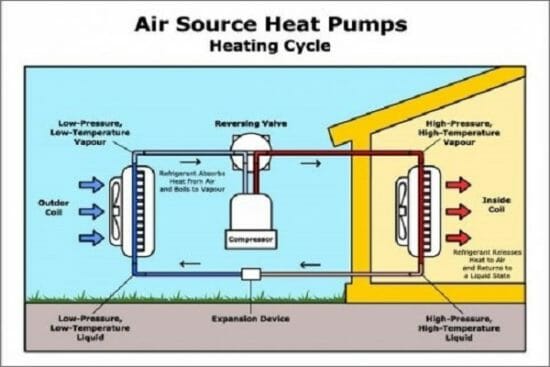
This course provides an introduction to the use of heat pumps in residential and small commercial buildings. During the cooling season, heat pumps operate like air conditioners, transferring heat from inside to outside the house. During the heating season, heat pumps transfer heat in the other direction—from outside to inside the house. Because significantly less energy is needed to transfer heat than to generate it, during the heating season heat pumps generally consume less energy than would be consumed by gas or electric furnaces. This course discusses the different types of heat pumps: air-source, mini-split, geothermal, and absorption. Additional discussion is provided about operation and maintenance, thermostats, and minimizing energy losses in ducts. This course is intended for civil, environmental and mechanical engineers concerned with saving energy by the use of heat pumps in residential and small commercial buildings. This course is based on the document, “Heat Pumps for Residential Buildings,” by Mark Rossow.
Learning Objectives:
At the successful conclusion of this course, you will learn the following knowledge and skills:- Understanding how heat pumps function
- Recognizing the three main types of heat pumps connected by ducts: air-to-air, water source, and geothermal
- Recognizing other types of heat pumps: ductless air-source, geothermal, and absorption
- Determining criteria for selecting the appropriate heat pump for a given application
- Characterizing heat pumps as split vs. packaged or multi-zoned vs. single-zoned
- Recognizing the need for careful selection of programmable thermostats in heat pump systems
- Planning operation and maintenance procedures
- Analyzing situations where absorption heat pumps would be appropriate
- Understanding the different types of geothermal heat pump systems
ACCEPTANCE GUARANTEE
Ncite Engineering Hub engineering courses & live webinars meet NCEES Guidelines for Professional Engineer licenses renewal in all 50 states.
Live Webinars satisfy strict “Live Contact Hour” state mandates.
100% money-back State Board Acceptance Guarantee
Ncite Engineering Hub will refund your payment if the PDH credits you earn are rejected by your state board for any reason.

Ethics Courses

[Live Webinar] Engineering Ethics: Lessons from the Flint Water Crisis — When Public Safety Was Not Held Paramountby Dr. Abolhassan Astaneh-Asl, Professor Emeritus. Ph.D., PE

E – 1742 Ethics: Determining Negligence in Engineering Failuresby Mark P. Rossow, PhD, P.E.

E – 1980 Engineering Ethics—Case Studies in Espionageby Mark P. Rossow, PhD, P.E.

E – 1142 – Engineering Ethics Case Study: The Challenger Disasterby Mark P. Rossow, PhD, P.E.
Once completed, your order and certificate of completion will be available in your profile when you’re logged in to the site.