
No data found for Custom Course Number
No data found for Custom Course Units
Intended Audience: Mechanical, HVAC & Electrical Engineers
PDH UNITS: 6
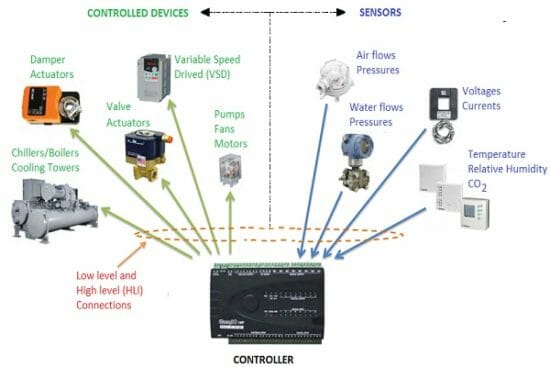
Building Management Systems (BMS) are computer-based systems that control a building’s heating, ventilation and air-conditioning (HVAC) systems, lighting; access control; security, intelligent lifts, water system, entertainment and fire systems. BMS are often described as the “brain” of smart buildings. BMS are most commonly implemented in large projects with extensive mechanical and electrical equipment. The BMS allows for an efficient use of energy by responding to varying conditions quickly and continuously without compromising on the comfort of the occupants. BMS systems also provide information on maintenance scheduling, data logging, and providing quick and effective responses to problems. It saves time and money. As a HVAC engineer, you will be faced with numerous design challenges pertaining to specifying logical sequence of operations, equipment control, remote monitoring, data communication, specifications, and type of controls. With more and more buildings getting equipped with sophisticated controls, the lines between control engineers and mechanical engineering are becoming blurred, with each having to know more about the other's discipline. This 6-hr course covers fundamental aspects of BMS design and HVAC controls. The course begins with a basic discussion of control systems, describes the types of sensors, controllers and controlled devices, and then moves quickly to direct digital controls (DDC) and Building Management Systems (BMS). The target audience for this course is electrical, mechanical & control engineers, HVAC designers, architects, maintenance and facilities personnel responsible for building services and infrastructure. A basic understanding of air conditioning systems is desired.
Learning Objectives:
At the successful conclusion of this course, you will learn the following knowledge and skills:- An overview of the control system basics.
- Learn different types of sensors and how are they used.
- Describe how a controller works and how it can be used.
- Describe and understand how controlled devices are used.
- Describe what Direct Digital Control (DDC) is and what functions these devices can perform.
- Understand how DDC’s communicates and share information in large building projects.
- Understand how DDC’s are networked to form a Building Management System (BMS).
- Learn the networking and communication principles of BMS.
- Describe the hardware and software elements of BMS
- Learn the standard and open communication protocols – BACnet and LonWorks
- Understand the capabilities of BMS with focus on HVAC systems.
ACCEPTANCE GUARANTEE

Ncite Engineering Hub engineering courses & live webinars meet NCEES Guidelines for Professional Engineer licenses renewal in all 50 states.
Live Webinars satisfy strict “Live Contact Hour” state mandates.
100% money-back State Board Acceptance Guarantee
Ncite Engineering Hub will refund your payment if the PDH credits you earn are rejected by your state board for any reason.
Ethics Courses

E – 1210 – Ethical Issues in Forensic Engineeringby Mr. J. Paul Guyer, P.E., R.A.

E – 1763 Ethics: Standards of Conduct for Employeesby Mark P. Rossow, PhD, P.E.

[Live Webinar] Engineering Ethics: Lessons from the Flint Water Crisis — When Public Safety Was Not Held Paramountby Dr. Abolhassan Astaneh-Asl, Professor Emeritus. Ph.D., PE

E – 1726 New Mexico Administrative Code for Professional Engineers, Title 16, Chapter 39by Mr. D. Allen Hughes, PE
Once completed, your order and certificate of completion will be available in your profile when you’re logged in to the site.