No data found for Custom Course Number
No data found for Custom Course Units
Intended Audience: electrical, instrumentation & control engineers, energy auditors, O & M professionals, contractors, estimators, facility managers and general audience.
PDH UNITS: 2
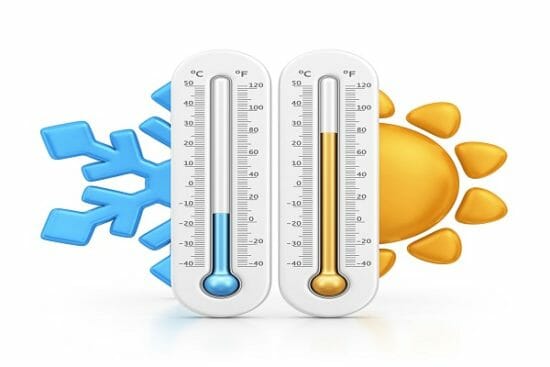
Temperature is a principle parameter that needs to be monitored and controlled in most engineering applications such as heating, cooling, drying and storage. Temperature can be measured via a diverse array of sensors. All of them infer temperature by sensing some change in a physical characteristic be it a thermal expansion, thermoelectricity, electrical resistance or thermal radiation. There are four basic types of temperature measuring devices, each working on a different principle:
- Mechanical (liquid-in-glass thermometers, bimetallic strips, bulb & capillary, pressure type etc.)
- Thermocouples
- Thermo-resistive (RTDs and thermistors)
- Radiative (infrared and optical pyrometers)
Learning Objectives
Upon completion of the course, the student should understand:- Learn various types of temperature sensors;
- Understand the principle of operation of thermocouples (Peltier effect, Thompson effect and Seebeck effect);
- Describe the basic construction of a thermocouple including materials used;
- Understand the three laws of thermocouples (law of intermediate metals, law of intermediate temperatures and law of additive voltages);
- Describe the difference between grounded, ungrounded and exposed junctions;
- Describe the basic principle and construction of RTD’s and Thermistors;
- Understand the difference between the two main types of thermistors i.e. positive; temperature coefficient (PTC) and negative temperature coefficient (NTC);
- Explain how RTD resistance varies for increase and decrease of temperatures using bridge circuits;
- Describe the basic principles of radiative temperature measurement including infrared and optical pyrometers.
ACCEPTANCE GUARANTEE
Ncite Engineering Hub engineering courses & live webinars meet NCEES Guidelines for Professional Engineer licenses renewal in all 50 states.
Live Webinars satisfy strict “Live Contact Hour” state mandates.
100% money-back State Board Acceptance Guarantee
Ncite Engineering Hub will refund your payment if the PDH credits you earn are rejected by your state board for any reason.
Ethics Courses

[Live Webinar] 7 Steps to Remedy Ethical Issues in Design-Buildby Mr. J. Paul Guyer, P.E., R.A.

E – 1408 – South Carolina Laws & Regulations for Professional Engineersby Mark P. Rossow, PhD, P.E.

E – 1814 World Trade Center- Engineering Ethical Issues in the Design, Construction, and the Investigation of Its Collapseby Dr. Abolhassan Astaneh-Asl, Professor Emeritus. Ph.D., PE

E – 2012 Engineering Ethics—Case Studies in Briberyby Mark P. Rossow, PhD, P.E.
Once completed, your order and certificate of completion will be available in your profile when you’re logged in to the site.