

No data found for Custom Course Number
No data found for Custom Course Units
Intended Audience: Electrical and general engineers
PDH UNITS: 3
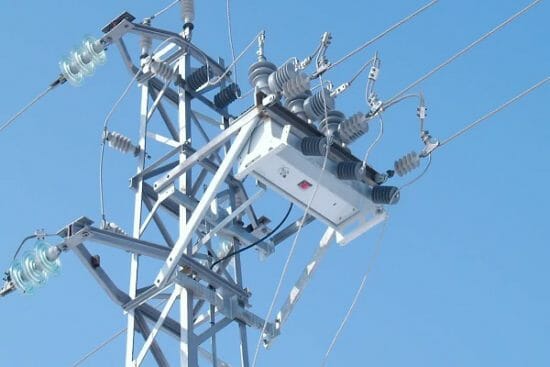
This course is the first part of the HVDC Technology – Complete course. The main objective of this course is to thoroughly present HVDC concepts, available arrangements, operation and control issues. The first part of this course presents basic configurations, substation arrangements, converter operation and control. Upon successful completion of this course, it is highly recommended that students take the second part of HVDC Technology – Complete Course. Electricity is produced as an alternating current (AC). It is also transferred and distributed as AC and in majority of applications it is used as AC. Nevertheless, in many situations, it is financially and technically beneficial to use direct current (DC) links. In some situations, it may be the only possible power transmission method. In situations, when two different AC systems cannot be synchronized or when the interconnection cable length is too long for stable AC transmission, DC transmission can be applied. At sending “converter station” the AC is converted to DC current, which is then transferred to a second, receiving converter station and converted back to AC. In “back-to-back” HVDC arrangements the two converter stations are placed in the same building, reducing the DC transmission length to zero. HVDC transmission installations can be classified into four broad groups and any arrangement typically involves a combination of two or more of these. The groups are: Transfer of bulk power where AC would be uneconomical or infeasible Link between electrical systems which use different frequencies, or between non-synchronised or isolated power systems which, even though they have the same nominal frequency, cannot be run reliably in synchronism. Introduction of power infeed without greatly increasing the short circuit level of the client’s AC system. Improvement of AC system operation by the fast and precise control of HVDC power. This course is suitable for electrical engineers with a desire to understand basic HVDC technology design and operation principles. Presented details cover issues related to HVDC configurations, HVDC substation design arrangements and equipment, converter operation and control. Learning Objectives This continuing education course is intended to provide you with the following specific knowledge and skills:
- HVDC principles
- HVDC configurations
- HVDC substation design arrangements including the description of vital elements
- Commutated converter operation principles
- HVDC link control
- Reactive power in AC systems
ACCEPTANCE GUARANTEE
Ncite Engineering Hub engineering courses & live webinars meet NCEES Guidelines for Professional Engineer licenses renewal in all 50 states.

Live Webinars satisfy strict “Live Contact Hour” state mandates.
100% money-back State Board Acceptance Guarantee
Ncite Engineering Hub will refund your payment if the PDH credits you earn are rejected by your state board for any reason.
Ethics Courses

E – 1207 – Ethical Issues from the St. Francis Dam Failureby Mr. J. Paul Guyer, P.E., R.A.

E – 1934 Engineering Ethics: “Hold Safety Paramount” to Prevent Loss of Life, and the Case of Columbia Shuttle Disasterby Dr. Abolhassan Astaneh-Asl, Professor Emeritus. Ph.D., PE

E – 1322 – Indiana Statutes and Rules Applicable to the Practice of Professional Engineeringby Mark P. Rossow, PhD, P.E.

E – 1154 – Ethics in Professional Practiceby Mark P. Rossow, PhD, P.E.
Once completed, your order and certificate of completion will be available in your profile when you’re logged in to the site.