


No data found for Custom Course Number
No data found for Custom Course Units
Intended Audience:: Structure, Civil, Building, Transportation, and Bridge Engineers
PDH UNITS: 2
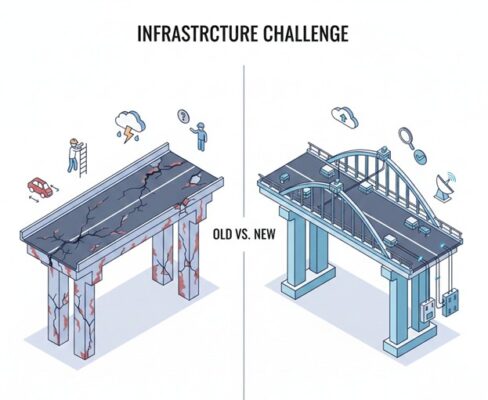
Bridge infrastructure worldwide faces unprecedented challenges from aging structures, increasing traffic demands, and climate change impacts. With more than 617,000 bridges in the United States alone and approximately 42 percent exceeding 50 years of age, effective monitoring and maintenance strategies are essential for public safety and economic vitality. Traditional inspection methods relying on periodic visual assessments cannot adequately detect hidden deterioration mechanisms or predict future condition with the accuracy required for optimized infrastructure management.
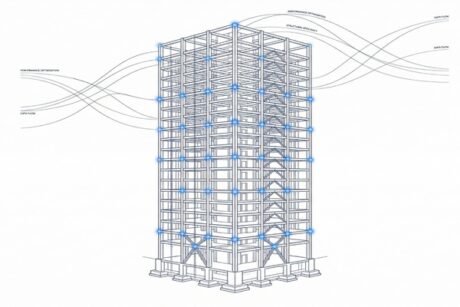
This comprehensive course introduces engineers to the transformative application of digital twin technology for bridge lifecycle management. Digital twins create virtual representations of physical bridges that are continuously updated with real-time operational data from sensors, enabling simulation, analysis, and optimization throughout the asset's lifecycle. Participants will learn the fundamentals of digital twin architecture, sensor technologies, data integration approaches, and machine learning analytics essential for modern infrastructure management.
Practical topics include design and construction phase integration, operations and maintenance optimization, predictive analytics for deterioration modeling, real-time condition monitoring, and risk-based decision support. Case studies from major bridge monitoring implementations worldwide illustrate successful digital twin applications and lessons learned. Whether you are a structural engineer, bridge inspector, transportation agency professional, or infrastructure asset manager, this course will equip you with knowledge to understand, evaluate, and implement digital twin solutions for bridge infrastructure.
Course Benefits- Gain cutting-edge knowledge in digital twin technology for infrastructure
- Learn practical implementation strategies from real-world case studies
- Understand sensor technologies and data integration approaches
- Prepare for future infrastructure management technology trends
- Enhance professional credentials with specialized knowledge
- Flexible learning format accommodates busy professional schedules
- Structural engineers and bridge engineers
- Bridge inspectors and condition assessment professionals
- Transportation agency engineers and managers
- Infrastructure asset managers
- Civil engineering consultants
- Smart infrastructure technology professionals
Learning Objectives:
At the successful conclusion of this course, you will learn the following knowledge and skills:- Explain the critical importance of bridge infrastructure monitoring and describe how digital twin technologies enhance traditional inspection approaches through continuous data analysis and real-time condition awareness.
- Define digital twin concepts including the three core components (physical asset, virtual representation, and bidirectional data connections) and distinguish digital twins from traditional CAD models and building information models.
- Identify sensor types used in bridge digital twins including strain gauges, accelerometers, fiber optic sensors, displacement sensors, and environmental monitors, and explain their data characteristics and applications.
- Describe data acquisition system architectures including wireless networks, edge computing approaches, and IoT integration for bridge monitoring applications.
- Explain data fusion and preprocessing techniques including Bayesian updating, Kalman filtering, and quality assurance requirements that prepare sensor data for digital twin analytics.
- Apply digital twin concepts across bridge lifecycle phases including design integration, construction monitoring, operations optimization, and rehabilitation planning.
- Describe machine learning algorithms for deterioration modeling including supervised learning, neural networks, physics-informed approaches, and uncertainty quantification methods.
- Explain real-time condition monitoring approaches including anomaly detection, damage identification, and streaming analytics for bridge health assessment.
- Apply risk-based decision support frameworks integrating condition assessment, consequence analysis, and multi-criteria optimization for bridge portfolio management.
- Evaluate implementation strategies based on global case studies and identify emerging technologies including federated learning, edge computing, autonomous inspection, and extended reality that will shape future bridge digital twin practice.
Once completed, your order and certificate of completion will be available in your profile when you’re logged in to the site.