



No data found for Custom Course Number
No data found for Custom Course Units
Intended Audience: electrical, instrumentation & control engineers, energy auditors, O & M professionals, contractors, estimators, facility managers and general audience.
PDH UNITS: 2
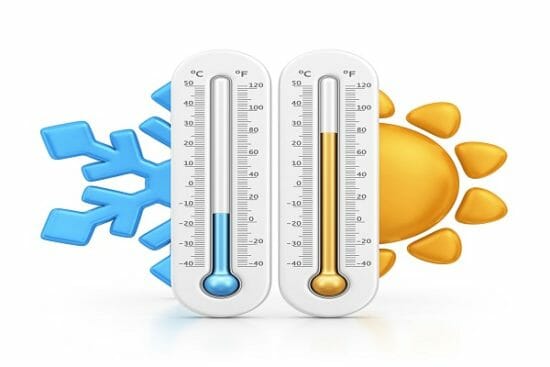
Temperature is a principle parameter that needs to be monitored and controlled in most engineering applications such as heating, cooling, drying and storage. Temperature can be measured via a diverse array of sensors. All of them infer temperature by sensing some change in a physical characteristic be it a thermal expansion, thermoelectricity, electrical resistance or thermal radiation. There are four basic types of temperature measuring devices, each working on a different principle:
- Mechanical (liquid-in-glass thermometers, bimetallic strips, bulb & capillary, pressure type etc.)
- Thermocouples
- Thermo-resistive (RTDs and thermistors)
- Radiative (infrared and optical pyrometers)
Learning Objectives
Upon completion of the course, the student should understand:- Learn various types of temperature sensors;
- Understand the principle of operation of thermocouples (Peltier effect, Thompson effect and Seebeck effect);
- Describe the basic construction of a thermocouple including materials used;
- Understand the three laws of thermocouples (law of intermediate metals, law of intermediate temperatures and law of additive voltages);
- Describe the difference between grounded, ungrounded and exposed junctions;
- Describe the basic principle and construction of RTD’s and Thermistors;
- Understand the difference between the two main types of thermistors i.e. positive; temperature coefficient (PTC) and negative temperature coefficient (NTC);
- Explain how RTD resistance varies for increase and decrease of temperatures using bridge circuits;
- Describe the basic principles of radiative temperature measurement including infrared and optical pyrometers.
ACCEPTANCE GUARANTEE
Ncite Engineering Hub engineering courses & live webinars meet NCEES Guidelines for Professional Engineer licenses renewal in all 50 states.

Live Webinars satisfy strict “Live Contact Hour” state mandates.
100% money-back State Board Acceptance Guarantee
Ncite Engineering Hub will refund your payment if the PDH credits you earn are rejected by your state board for any reason.
Ethics Courses

E – 1693 Structure Inspection, Procedure & Ethicsby Mr. Joseph Chaiban, P.E., SI.JD.

E – 1726 New Mexico Administrative Code for Professional Engineers, Title 16, Chapter 39by Mr. D. Allen Hughes, PE

E – 2043 Florida Laws and Rules for Professional Engineers Biennium Cycle 2023-2025by Mark P. Rossow, PhD, P.E.

E – 1154 – Ethics in Professional Practiceby Mark P. Rossow, PhD, P.E.
Once completed, your order and certificate of completion will be available in your profile when you’re logged in to the site.


E - 2041 Design, Maintenance and Bridge Failures with Efficient Mitigation Measures