



No data found for Custom Course Number
No data found for Custom Course Units
Intended Audience: mechanical engineers, civil engineers, other design and construction professionals
PDH UNITS: 3
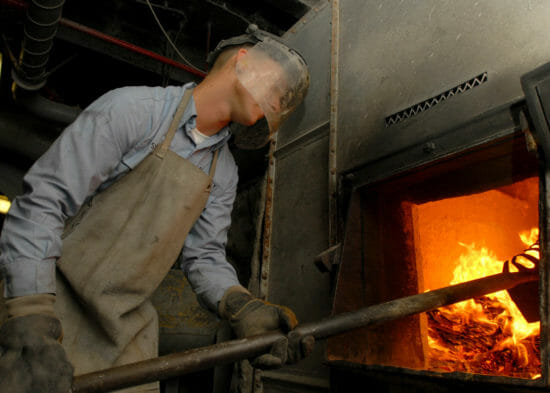
This course describes and quantifies whenever possible the air pollution particulate emissions which are the direct result of the incineration process. The incineration process consists of burning solid, semisolid, liquid, or gaseous waste to produce carbon dioxide, water, and ash. It is an efficient means of reducing waste volume. The solid, incombustible residue of incineration is inert, sanitary, and sensibly odorless. Course Outline 1. INCINERATOR EMISSIONS 2. STACK EMISSION REGULATIONS AND THE PERMITTING PROCESS 3. MEASURING TECHNIQUES This course will give you an introduction to waste incinerators and their permitting requirements under federal law.
Learning Objectives
At the successful conclusion of this course, you’ll be able to identify and discuss:- Learn about the types of incinerator waste material;
- Learn about emission factors for refuse incinerators without controls;
- Learn about waste classifications;
- Learn the ultimate analysis of a typical general solid waste;
- Learn the functions of incinerators;
- Learn about the requirements of the federal Clean Air Act;
- Learn the function and applications of rotary kiln incinerators;
- Learn the fundamental of particulate emission estimating;
- Learn the emission factors for sewage sludge incinerators;
- Learn about stack emission regulations and the permitting process; and
- learn about the permitting process in federally designated attainment and nonattainment areas.
ACCEPTANCE GUARANTEE
Ncite Engineering Hub engineering courses & live webinars meet NCEES Guidelines for Professional Engineer licenses renewal in all 50 states.

Live Webinars satisfy strict “Live Contact Hour” state mandates.
100% money-back State Board Acceptance Guarantee
Ncite Engineering Hub will refund your payment if the PDH credits you earn are rejected by your state board for any reason.

Ethics Courses

E – 2057 Modern Sensors – Detecting Physical Conditionsby Mr. Don Parnell, PE

E – 1154 – Ethics in Professional Practiceby Mark P. Rossow, PhD, P.E.

E – 1861 Indiana Statutes and Rules for Professional Engineers 2020-2022 Bienniumby Mark P. Rossow, PhD, P.E.

E – 1633 – Florida Laws and Rules Biennium Cycle 2017-2019by Mark P. Rossow, PhD, P.E.
Once completed, your order and certificate of completion will be available in your profile when you’re logged in to the site.