



No data found for Custom Course Number
No data found for Custom Course Units
Intended Audience: civil, environmental, and chemical engineers. and energy engineers..
PDH UNITS: 2
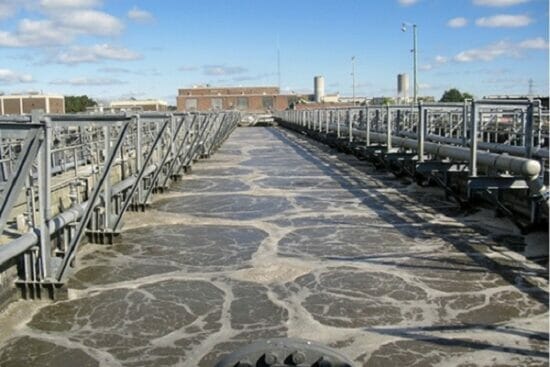
The activated sludge process is very widely used for biological wastewater treatment. This course includes background on biological wastewater treatment, a general description of the activated sludge process, information about several variations of the activated sludge process, discussion of design calculations for an activated sludge aeration tank, and discussion of activated sludge operational calculations. Example calculations and discussion of using an Excel spreadsheet for making the calculations are also included. This course is intended primarily for civil engineers, environmental engineers, and chemical engineers. After completing this course you will be familiar with the common variations of the activated sludge process used for biological wastewater treatment and be able to make typical aeration tank design and operational calculations.
Learning Objectives:
At the successful conclusion of this course, you will learn the following knowledge and skills:- Know the equation for biological oxidation and how it fits into the organic carbon cycle
- Know the equation for photosynthesis and how it fits into the organic carbon cycle
- Know the major components of an activated sludge wastewater treatment system
- Be able to describe the differences between an extended aeration and conventional activated sludge system
- Be able to describe the differences between a contact stabilization and conventional activated sludge system
- Be able to calculate required aeration tank volume (in U.S. units) for a specified volumetric loading, hydraulic residence time, or aeration tank F:M ratio, if given suitable aeration tank influent and aeration tank parameter information.
- Be able to calculate required aeration tank volume (in S.I. units) for a specified volumetric loading, hydraulic residence time, or aeration tank F:M ratio, if given suitable aeration tank influent and aeration tank parameter information.
- Be able to calculate the required activated sludge recycle flow rate, waste activated sludge flow rate, and aeration tank F:M ratio, if given suitable wastewater stream and aeration tank information along with the desired value for sludge retention time.
ACCEPTANCE GUARANTEE
Ncite Engineering Hub engineering courses & live webinars meet NCEES Guidelines for Professional Engineer licenses renewal in all 50 states.
Live Webinars satisfy strict “Live Contact Hour” state mandates.
100% money-back State Board Acceptance Guarantee
Ncite Engineering Hub will refund your payment if the PDH credits you earn are rejected by your state board for any reason.

Ethics Courses

E – 1141 Engineering Ethics-NSPE Code of Ethics for Engineersby Mark P. Rossow, PhD, P.E.

E – 3123 Engineering Ethics Fundamentalsby Dr. M. A. Karim, P.E., BCEE, F.ASCE

E – 3124 Engineering Ethics in the Age of AIby Dr Jeelan Moghraby, PhD., MBA

E – 3019 Engineering Ethics: Ship and Bridge Collision; Ethics Violation Caused Six Deathsby Dr. Abolhassan Astaneh-Asl, Professor Emeritus. Ph.D., PE
Once completed, your order and certificate of completion will be available in your profile when you’re logged in to the site.