


No data found for Custom Course Number
No data found for Custom Course Units
Intended Audience: petroleum engineers, chemical engineers, geotechnical engineers, environmental engineers, and civil engineers
PDH UNITS: 3
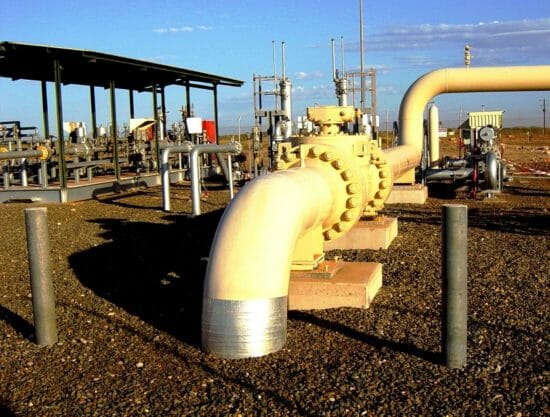
Several different equations have been proposed and are in use for natural gas pipeline flow calculations. This course provides information about four of them, the Weymouth Equation, the Panhandle A Equation, the Panhandle B Equation, and the Darcy Weisbach Equation, along with information about the fluid properties needed and their estimation or calculation. This course is intended for, petroleum engineers, chemical engineers, geotechnical engineers, environmental engineers, and civil engineers. An attendee of this course will gain knowledge about four equations used for natural gas pipeline flow equations and how to use them.
Learning Objectives
At the successful conclusion of this course, you’ll be able to identify and discuss:- Be familiar with the natural gas properties, density, specific gravity, molecular weight, compressibility factor, and viscosity, and their use in pipeline flow calculations.
- Be able to calculate the compressibility factor for natural gas with specified average gas pressure and temperature and known specific gravity.
- Be able to calculate the viscosity of natural gas with specified average gas pressure and temperature and known specific gravity.
- Be able to obtain a value for the friction factor using the Moody diagram for given Re and /D.
- Be able to calculate a value for the friction factor for specified Re and /D, using the appropriate equation for f.
- Be familiar with the guidelines for when it is appropriate to use the Darcy Weisbach equation for natural gas pipeline flow calculations.
- Be able to use the Darcy Weisbach equation and the Moody friction factor equations to calculate the frictional pressure drop for a given flow rate of a specified fluid through a pipe with known diameter, length and roughness.
- Be able to use the Weymouth equation to calculate gas flow rate through a pipe with known diameter and length, elevation difference between pipeline inlet and outlet, specified inlet and outlet pressure and enough information to calculate gas properties.
- Be able to use the Panhandle A equation to calculate gas flow rate through a pipe with known diameter and length, elevation difference between pipeline inlet and outlet, specified inlet and outlet pressure and enough information to calculate gas properties.
- Be able to use the Panhandle B equation to calculate gas flow rate through a pipe with known diameter and length, elevation difference between pipeline inlet and outlet, specified inlet and outlet pressure and enough information to calculate gas properties.
ACCEPTANCE GUARANTEE

Ncite Engineering Hub engineering courses & live webinars meet NCEES Guidelines for Professional Engineer licenses renewal in all 50 states.
Live Webinars satisfy strict “Live Contact Hour” state mandates.
100% money-back State Board Acceptance Guarantee
Ncite Engineering Hub will refund your payment if the PDH credits you earn are rejected by your state board for any reason.
Ethics Courses

E – 2064 Ethical Challenges of Dual Use Technologiesby Mr. Don Parnell, PE

E – 1142 – Engineering Ethics Case Study: The Challenger Disasterby Mark P. Rossow, PhD, P.E.

E – 1736 Ethics and the Engineer – Food for Thoughtby Professor Roger Messenger, Ph.D., P.E.

E – 1703 Handling Ethical Issues in Professional Engineering Practice in FLby Mr. Joseph Chaiban, P.E., SI.JD.
Once completed, your order and certificate of completion will be available in your profile when you’re logged in to the site.