




No data found for Custom Course Number
No data found for Custom Course Units
Intended Audience: civil engineers, structural engineers, geotechnical engineers, geologists and other design and construction professionals
PDH UNITS: 3
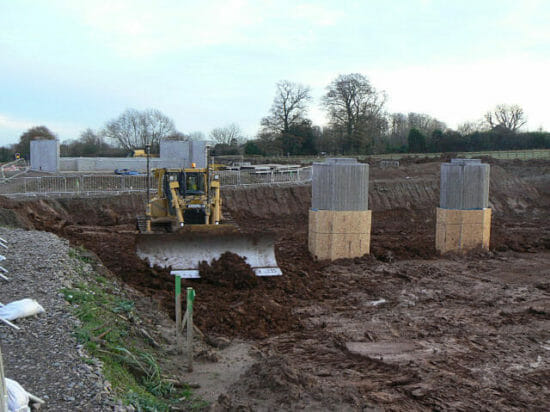
Foundations may be constructed on fills and backfilled material. Fills may include conventional compacted fills; hydraulic fills; and uncontrolled fills of soils or industrial and domestic wastes, such as ashes, slag, chemical wastes, building rubble, and refuse. Properly placed compacted fill will be more rigid and uniform and have greater strength than most natural soils. Hydraulic fills may be compacted or uncompacted and are an economical means of providing fill over large areas. Except when cohesionless materials, i.e., clean sands and gravels, are placed under controlled conditions so silty pockets are avoided and are compacted as they are placed, hydraulic fills will generally require some type of stabilization to ensure adequate foundations. Course Outline 1. TYPES OF FILL 2. FOUNDATIONS ON COMPACTED FILLS 3. COMPACTION REQUIREMENTS 4. PLACING AND CONTROL OF BACKFILL 5. FILL SETTLEMENTS 6. HYDRAULIC FILLS This is an introduction to methods, techniques and equipment for selecting, placing and compacting fill and backfill materials for structure foundations.
Learning Objectives
At the successful conclusion of this course, you’ll be able to identify and discuss:- Learn about the different methods for compacting fills for foundations;
- Learn about the types of fill and when their use is applicable;
- Learn the methods and techniques used to construct foundations on compacted fills;
- Learn the different compaction requirements for fills and backfills depending on the soil type used and the nature of the foundation to be constructed;
- Learn the fundamentals of placing and controlling fill and backfill;
- Learn how to accommodate and control fill settlement; and
- Learn about hydraulic fills and their application.
ACCEPTANCE GUARANTEE
Ncite Engineering Hub engineering courses & live webinars meet NCEES Guidelines for Professional Engineer licenses renewal in all 50 states.

Live Webinars satisfy strict “Live Contact Hour” state mandates.
100% money-back State Board Acceptance Guarantee
Ncite Engineering Hub will refund your payment if the PDH credits you earn are rejected by your state board for any reason.
Ethics Courses

E – 1910 Engineering Ethics: I-35W Bridge Collapse; Engineering Errors and Ethical Issuesby Dr. Abolhassan Astaneh-Asl, Professor Emeritus. Ph.D., PE

E – 1840 Engineering Ethics: The Collapse of the FIU Pedestrian Bridge. Design & Ethical Failuresby Dr. Abolhassan Astaneh-Asl, Professor Emeritus. Ph.D., PE

E – 2007 Engineering Ethics—Case Studies in Stealing Trade Secretsby Mark P. Rossow, PhD, P.E.

E – 1736 Ethics and the Engineer – Food for Thoughtby Professor Roger Messenger, Ph.D., P.E.
Once completed, your order and certificate of completion will be available in your profile when you’re logged in to the site.
Course No E - 1259
PDH Units 3.00