
No data found for Custom Course Number
No data found for Custom Course Units
Intended Audience: civil engineers and other infrastructure design and construction professionals
PDH UNITS: 5
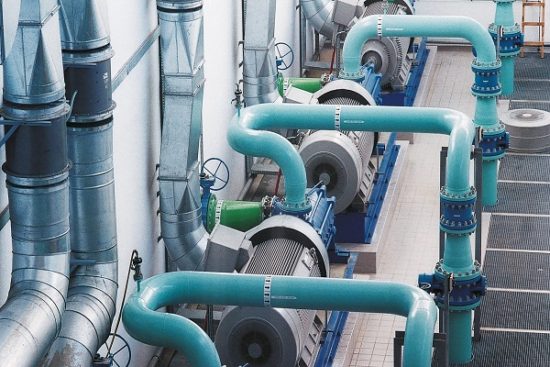
This course provides guidance and criteria for the design of high lift and water booster pumping stations in potable water distribution systems. Criteria are provided for pumping units operating as components in distribution systems. Guidance is provided for sizing and selection of pumps and pump drives, piping, control valving, flow metering, pump station structures, and operational features. Course Outline 1. GENERAL 2. DESIGN CONSIDERATIONS 3. PUMPING EQUIPMENT 4. HYDRAULICS 5. PUMPING STATION LAYOUTS 6. OPERATING EFFICIENCIES This course will introduce you to basic considerations in design and construction of pumping stations for potable water supply and distribution systems.
Learning Objectives
At the successful conclusion of this course, you’ll be able to identify and discuss:- Learn about main pumping stations located near water treatment or potable water storage facilities which supply water to the distribution system and pump directly into the piping system
- Learn the basis for determining the flow demand of a water supply and distribution system.
- Learn about the factors to be considered in a hydraulic network analysis to determine system demand.
- Learn the recommended maximum, minimum and residual curb pressures for a water distribution system.
- Learn about the two types of pumps generally used for potable water pumping applications.
- Learn about "normal rising", "drooping" and "steeply rising" pump head capacity curves.
- Learn design and layout recommendations for pump supply and discharge piping.
ACCEPTANCE GUARANTEE

Ncite Engineering Hub engineering courses & live webinars meet NCEES Guidelines for Professional Engineer licenses renewal in all 50 states.
Live Webinars satisfy strict “Live Contact Hour” state mandates.
100% money-back State Board Acceptance Guarantee
Ncite Engineering Hub will refund your payment if the PDH credits you earn are rejected by your state board for any reason.
Ethics Courses

E – 2020 Engineering Ethics — Case Studies in Fraudulent Safety Claimsby Mark P. Rossow, PhD, P.E.

[Live Webinar] Engineering Ethics: Lessons from the Flint Water Crisis — When Public Safety Was Not Held Paramountby Dr. Abolhassan Astaneh-Asl, Professor Emeritus. Ph.D., PE

E – 1428 An Alternative Account of the Ford Pinto Caseby Mark P. Rossow, PhD, P.E.

E – 1725 Ethical Behavior;The 2005 Taum Sauk Dam Breachby Mark P. Rossow, PhD, P.E.

Once completed, your order and certificate of completion will be available in your profile when you’re logged in to the site.