


• No products in the cart.

Profile Photo

No data found for Custom Course Number

No data found for Custom Course Units

$25.00

Profile Photo
$25.00

Intended Audience: HVAC Engineers

PDH UNITS: 1

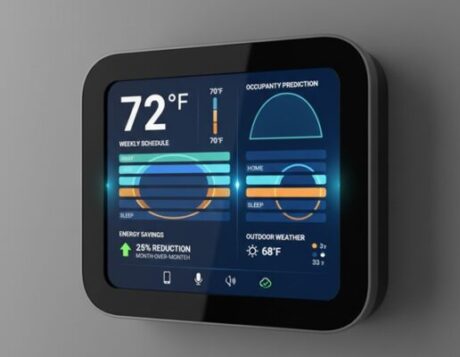
Modern HVAC systems have evolved into highly integrated, sensor-driven control systems designed to deliver comfort, energy efficiency, indoor air quality, and operational safety. Unlike traditional HVAC equipment that relied on simple thermostats and manual controls, today’s systems depend on a wide range of sensors, signal types, wiring configurations, and control logic to monitor physical conditions and respond intelligently to changing building demands. Sections 1 through 13 introduce the foundational components of modern HVAC sensing and control. These sections cover how physical conditions such as temperature, humidity, pressure, airflow, air quality, and occupancy are detected; how sensor signals are transmitted using analog, binary, and multi-state methods; how controllers interpret these signals; and how wiring configurations and contact logic affect system reliability and safety. A strong understanding of these topics is essential for HVAC technicians, controls specialists, and engineers. Mastery of sensor types, signal standards, and wiring practices enables accurate installation, effective troubleshooting, proper commissioning, and long-term system performance. These sections form the technical foundation required for more advanced topics such as sequencing, PID control, building automation systems, and diagnostics.

Learning Objectives:

At the successful conclusion of this course, you will learn the following knowledge and skills:
  • Explain the role of sensors in modern HVAC systems and their importance to comfort, efficiency, and safety.
  • Identify and describe common HVAC sensor types, including temperature, humidity, pressure, airflow, air quality, and occupancy sensors.
  • Explain the basic operating principles of temperature sensors such as thermistors, RTDs, and thermocouples.
  • Describe the function of humidity and dew point sensing in preventing condensation and maintaining indoor air quality.
  • Differentiate between static, dynamic, and differential pressure sensing and explain their HVAC applications.
  • Describe airflow measurement methods and their role in ventilation and demand-controlled ventilation systems.
  • Identify common indoor air quality (IAQ) sensors and explain how their data is used in HVAC control strategies.
  • Explain the difference between analog and digital signaling concepts in HVAC systems.
  • Describe current and voltage signals, including common ranges and their advantages and disadvantages.
  • Differentiate between analog input, analog output, binary input, binary output, multi-state input, and multi-state output signals.
  • Explain how HVAC controllers use different signal types to monitor conditions and control equipment.
  • Describe the function of normally open (NO) and normally closed (NC) contacts and their role in control and safety circuits.
  • Explain why NC contacts are commonly used in critical and fail-safe HVAC applications.
  • Differentiate between two-wire, three-wire, and four-wire sensors and explain how they are powered and connected.
  • Identify appropriate sensor wiring configurations for different HVAC applications and environments.
  • Recognize common advantages and limitations associated with various sensor types and signal methods.
  • Apply basic sensor and signal knowledge to interpret HVAC wiring diagrams and control sequences.
  • Demonstrate foundational understanding necessary for troubleshooting sensor and signal-related HVAC issues.

Course No E - 3063
PDH Units: 1
Copyright 2025 · All Rights Reserved. Ncite Engineering Hub, LLC 513 E- Main Street # 981 Charlottesville, VA 22902 USA