




No data found for Custom Course Number
No data found for Custom Course Units
Intended Audience: Traffic engineers and other transportation professionals
PDH UNITS: 1
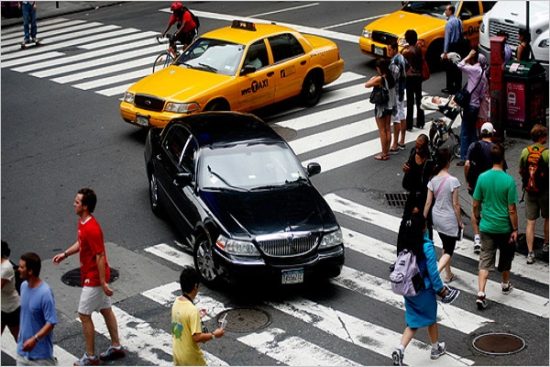
In this online engineering PDH course, estimates are discussed of the crash reduction expected if various countermeasures are implemented with respect to traffic signals and pedestrian crashes. The estimates are presented as Crash Reduction Factors (CRFs). Traffic engineers and other transportation professionals can use the information contained in this course when asking the following types of question: Which countermeasures might be considered at the signalized intersection of Maple and Elm Streets, an intersection that is experiencing a high number of crashes? What changes in the number of crashes are possible with the various countermeasures for traffic signals? Similarly, which countermeasures might be considered at the signalized intersection of Oak and Pine Streets, an intersection experiencing a high number of pedestrian crashes? What change in the number of pedestrian crashes can be expected with the implementation of the various countermeasures for pedestrian crashes? This course is based on the documents, “Traffic Signals” FHWA-SA-10-005, November, 2009, and “Toolbox of Countermeasures and Their Potential Effectiveness for Pedestrian Crashes,” FHWA-SA-104, May 2008, which can be accessed at https://safety.fhwa.dot.gov/intersection/conventional/signalized/fhwasa10005/brief_5.cfm and https://safety.fhwa.dot.gov/ped_bike/tools_solve/ped_tctpepc/
Learning Objectives
At the conclusion of this course, you’ll be able to identify and discuss:- Define “crash reduction factors”;
- Identify, for traffic signals, CRFs for signal operations, signal hardware, and combination signal and other countermeasures;
- Identify, for pedestrian crashes, CRFs for signalization countermeasures, geometric countermeasures, and signs/markings/operational countermeasures;
- Explain the purpose, warrants for signal installation, advantages, and disadvantages of traffic signals; and
- Describe signal improvements that may decrease crashes.
ACCEPTANCE GUARANTEE
Ncite Engineering Hub engineering courses & live webinars meet NCEES Guidelines for Professional Engineer licenses renewal in all 50 states.
Live Webinars satisfy strict “Live Contact Hour” state mandates.
100% money-back State Board Acceptance Guarantee
Ncite Engineering Hub will refund your payment if the PDH credits you earn are rejected by your state board for any reason.

Ethics Courses

E – 1322 – Indiana Statutes and Rules Applicable to the Practice of Professional Engineeringby Mark P. Rossow, PhD, P.E.

E – 2040 Engineering Ethics: “Hold Safety Paramount” to Prevent Loss of Life – the Case of the Ford Pinto Firesby Dr. Abolhassan Astaneh-Asl, Professor Emeritus. Ph.D., PE

E – 1703 Handling Ethical Issues in Professional Engineering Practice in FLby Mr. Joseph Chaiban, P.E., SI.JD.

E – 3019 Engineering Ethics: Ship and Bridge Collision; Ethics Violation Caused Six Deathsby Dr. Abolhassan Astaneh-Asl, Professor Emeritus. Ph.D., PE
Once completed, your order and certificate of completion will be available in your profile when you’re logged in to the site.


E - 1133 Energy Conservation in Industrial and Commercial Environment