



No data found for Custom Course Number
No data found for Custom Course Units
Intended Audience: civil, construction, mechanical engineers
PDH UNITS: 5
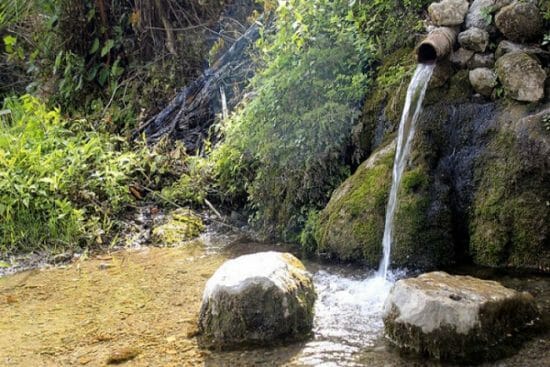
Groundwater has many advantages over water from other sources and has considerable economic importance. The principal ways of using groundwater are through spring and well developments. A spring is a natural outflow of water from an underground supply to the ground surface. A well (vertical or horizontal) is a hole drilled, dug, or driven into the earth to obtain groundwater. The purpose of this course is to provide engineers with some of the fundamentals of planning and developing groundwater resources. The nature of groundwater, methods of obtaining it from springs or wells, and the development and maintenance of groundwater recovery systems are described. This course is based on the USDA Natural Resources Conservation Service document, “Part 650–Engineering Field Handbook–Ch. 12– Springs and Wells,” Pub. #210-VI-NEH, July, 2012.
Learning Objectives
At the successful conclusion of this course, you’ll be able to identify and discuss:- Students will be able to identify sources of water supply in water-bearing materials;
- Students will understand the effects of geologic structure on groundwater resources;
- Students will learn principles of spring design and maintenance;
- Students will be familiar with the various types of wells and their development after installation;
- Students will be able to apply principles of hydraulics, and pump selection;
- Students will understand applicable state laws and groundwater rights; and
- Students will learn principles of contracts, specifications, and abandonment.
Course Reviews
5
- 5 stars1
- 4 stars0
- 3 stars0
- 2 stars0
- 1 stars0
ACCEPTANCE GUARANTEE
Ncite Engineering Hub engineering courses & live webinars meet NCEES Guidelines for Professional Engineer licenses renewal in all 50 states.

Live Webinars satisfy strict “Live Contact Hour” state mandates.
100% money-back State Board Acceptance Guarantee
Ncite Engineering Hub will refund your payment if the PDH credits you earn are rejected by your state board for any reason.

Ethics Courses

E – 1428 An Alternative Account of the Ford Pinto Caseby Mark P. Rossow, PhD, P.E.

E – 1935 Engineering Ethics: The Millennium Tower Sinking and Tilting- the Root Cause Was Engineering Ethics Violationsby Dr. Abolhassan Astaneh-Asl, Professor Emeritus. Ph.D., PE

E – 1728 New Jersey Statutes and Rules for Professional Engineersby Mr. D. Allen Hughes, PE

E – 1756 Engineering Ethics and Responsible Chargeby Mr. D. Allen Hughes, PE
Once completed, your order and certificate of completion will be available in your profile when you’re logged in to the site.


Signing up for this course forced me to study Chapter 12 of the USDA-NRCS Engineering Field Handbook. Worth my time. Now if I could only find a well-driller who will actually sample the aquifer formation and properly design the screen and gravel pack!