



Ncite Engineering Hub engineering courses & live webinars meet NCEES Guidelines for Professional Engineer licenses renewal in all 50 states.
$150.00
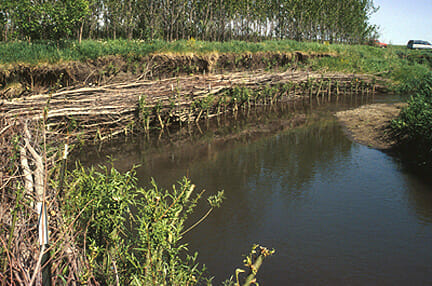
Streambank and shoreline protection consists of restoring and protecting banks of streams, lakes, estuaries, and excavated channels against scour and erosion. In the past, many organizations involved in water resource management have preferred to use engineered structures to provide protection. Today, engineered structures often remain as viable options, but as part of the present-day recognition of the need to promote sustainability and diversity in natural systems, engineers should seriously consider methods that are sustainable and that restore ecological functions and natural habitats. This course discusses traditional engineered structures but, in addition, discusses soil bioengineering approaches to protection. Soil bioengineering consists of using living woody plant materials as structural components to provide soil protection and reinforcement. The course discusses the attributes and limitations of both approaches and contains recommendations about which approach is most appropriate for achieving a given protection goal. Instances in which soil bioengineering can be combined with engineered structures are also discussed. Practical design considerations, construction techniques, and guidelines for the selection of appropriate materials are presented.
This course is based on Ch. 16 of the U.S. Department of Agriculture Engineering Field Handbook, “Streambank and Shoreline Protection,” October, 1996.
Streambank and shoreline protection consists of restoring and protecting banks of streams, lakes, estuaries, and excavated channels against scour and erosion. In the past, many organizations involved in water resource management have preferred to use engineered structures to provide protection. Today, engineered structures often remain as viable options, but as part of the present-day recognition of the need to promote sustainability and diversity in natural systems, engineers should seriously consider methods that are sustainable and that restore ecological functions and natural habitats. This course discusses traditional engineered structures but, in addition, discusses soil bioengineering approaches to protection. Soil bioengineering consists of using living woody plant materials as structural components to provide soil protection and reinforcement. The course discusses the attributes and limitations of both approaches and contains recommendations about which approach is most appropriate for achieving a given protection goal. Instances in which soil bioengineering can be combined with engineered structures are also discussed. Practical design considerations, construction techniques, and guidelines for the selection of appropriate materials are presented.
This course is based on Ch. 16 of the U.S. Department of Agriculture Engineering Field Handbook, “Streambank and Shoreline Protection,” October, 1996.