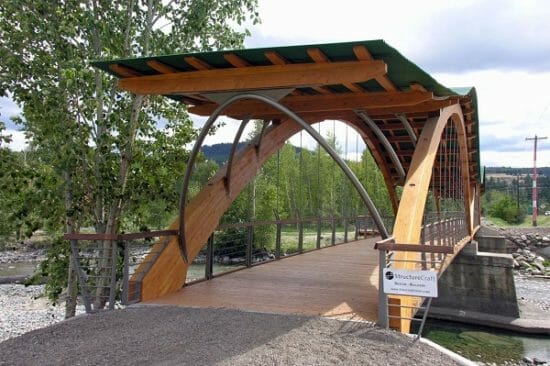
E – 1837 Wood Uses In Buildings and Bridges
$50.00
In North America, most housing and commercial structures built prior to the 20th century used wood as the major structural material. The abundant wood resource formed the basic structure for most houses, commercial buildings, bridges, and utility poles. Today, houses and many light commercial and industrial buildings are made using modern wood structural materials. Recently, there has been increased interest in using wood for various types of transportation structures, including highway bridges.
In this course, the features of various types of building systems are described. Emphasis is placed on how these systems have adapted to the use of modern materials and techniques. For example, where floor, wall, and roof sheathing for light-frame construction were once commonly made from wood boards, sheathing is now commonly made from structural panel products, such as plywood and oriented strandboard (OSB). Compared with boards, these panel products are quicker to install and provide improved structural resistance to wind and earthquake loadings. Furthermore, prefabricated floor and wall panels along with prefabricated roof and floor trusses or I-joists are replacing piece-by-piece on-site construction with dimension lumber.
A structure can be enclosed within a short time on site using factory-made panelized systems. Engineered wood products are being used increasingly for transportation structures. A brief description of the uses of wood in railroad and highway bridges and other transportation structures is included.


 E - 1793 HVAC – How to Size and Design Ducts
1 × $150.00
E - 1793 HVAC – How to Size and Design Ducts
1 × $150.00  E - 1793 HVAC – How to Size and Design Ducts
  E - 1883 Development of Reinforcement for the Civil PE and Structural SE Exams