Description
This course discusses waste treatment using, primarily, activated carbon. Both liquid and vapor phase adsorption are discussed. Adsorption technologies may be applicable to treatment of both sanitary and industrial waste streams.
Course Outline
1. CARBON ADSORPTION
2. REGENERATION, REACTIVATION, AND DISPOSAL OF SPENT ACTIVATED CARBON
3. NON-CARBON ADSORPTION
This is an introduction to the design of processes employing adsorption technologies such as those using activated carbon.
- Learn about the difference between powdered activated carbon (PAC) and granular activated carbon (GAC);
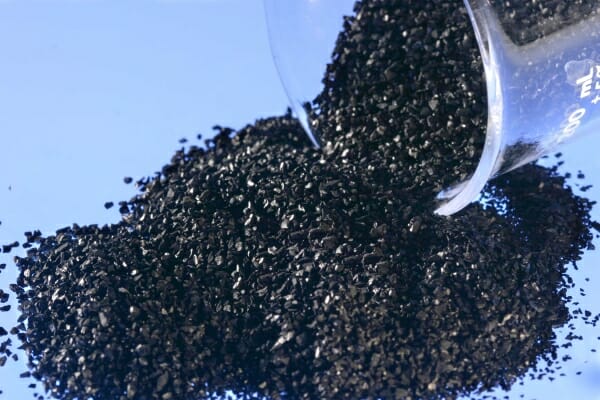
- Learn about the properties of cocoanut shell GAC;
- Learn the importance of isotherms, how they are developed, and how they are employed in designing adsorption processes;
- Learn how to calculate an appropriate waste-stream-to-adsorption-media contact time;
- Learn how to calculate the appropriate contact adsorber equipment size;
- Learn how to calculate the adsorption media bed depth; and
- Learn the importance of backwashing in process design.
 E - 1433 Carrier; Commercial Load Estination
1 × $75.00
E - 1433 Carrier; Commercial Load Estination
1 × $75.00  E - 1433 Carrier; Commercial Load Estination
  E - 1110 Ponds – Planning, Design, and Construction
  E - 1443 OSHA: Ground-Fault Protection on Construction Sites