In 2014, the City of Flint, Michigan, changed its drinking water source to the Flint River without implementing required corrosion-control treatment.
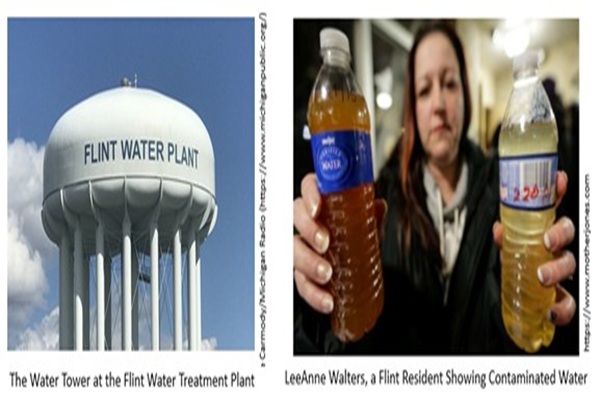
As a result, the highly corrosive water caused lead to leach from aging pipes into the drinking water supply, disproportionately affecting low-income and minority communities. Residents were exposed to contaminated water, leading to serious health effects including elevated blood lead levels in children, skin and hair problems, and an outbreak of Legionnaires’ disease that caused multiple deaths.
Despite widespread complaints about discolored, foul-smelling water, officials maintained for more than a year that the water was safe.
This case represents not only a failure of public decision-making, but also a profound failure of engineering ethics.
The webinar begins with a clear, fact-based overview of the events that led to the Flint water crisis, including the change in the water source, the absence of corrosion-control treatment, and the resulting contamination and lead poisoning of the public water supply. Participants will develop an understanding of the technical and decision-making timeline that led to the failure.
The crisis came to national attention through the efforts of residents and independent investigators. These included LeeAnne Walters, a Flint resident whose family experienced serious health impacts; Curt Guyette, an investigative reporter from the ACLU of Michigan; Dr. Mona Hanna-Attisha, a pediatrician who documented elevated lead levels in children; Miguel Del Toral of the EPA, who challenged the state’s compliance with the Lead and Copper Rule; and Professor Marc Edwards of Virginia Tech, whose team conducted independent water testing and disputed official assurances of safety.
The second part examines the growing gap between engineering knowledge and the decisions being made. Warning signs were present. Data existed. Engineers and experts raised concerns. Yet, critical decisions continued to be made that did not adequately protect public safety. This section places participants in the position of engineers and decision-makers facing real-world pressures—cost, schedule, authority, and institutional constraints.
The final part focuses on engineering ethics, with particular emphasis on Fundamental Canon 1 of the Code of Ethics for Engineers:
“Engineers shall hold paramount the safety, health, and welfare of the public.”
The webinar examines how failure to uphold this fundamental obligation was a central factor in the creation, continuation, and escalation of the crisis.
The webinar concludes with key lessons learned and practical tools that engineers can use in their professional practice to recognize ethical risks, respond to pressure, and act to protect public safety.
This webinar is not only about understanding a past failure, it is about equipping engineers with the awareness and tools needed to prevent similar failures in the future.
Book References*:
- The Staff of Bridge Magazine, Editor: Bob Campbell, (2016) Poison on Tap, How Government Failed Flint and the Heroes Who Fought Back, Mission Point Press.
- MCRC, (2017), The Flint Water Crisis, Systematic Racism Through the Lens of Flint, Michigan Civil Rights Commission.
- Anna Clark, (2018) The Poisoned City – Flint’s Water and the American Urban Tragedy. Picador Metropolitan Books.
- Mona Hanna, (2019), What the Eyes Don't See: A Story of Crisis, Resistance, and Hope in an American City, One World Essentials Series.
- Benjamin J. Pauli, (2019), Flint Fights Back - Environmental Justice and Democracy in the Flint Water Crisis. The MIT Press.
- Katrinell M. Davis, (2021), Tainted Tap, The University of North Carolina Press.
- Candy J. Cooper, Poisoned Water, Bloomsbury Children’s Books.
* (A complete list of references will be in the PDF of PowerPoint presentation of the Webinar)
Date: Wednesday April 29, 2026 . 2 - 4 pm ET
Credits: 2 PDH Units
Learning Objectives
On successfully completing the quiz associated with this presentation, the attendee will:
- Understand the sequence of managerial and engineering decisions that led to the Flint water crisis
- Identify early warning signs and failure points in engineering and decision-making processes
- Recognize the essential role of engineers in protecting public health and safety in complex organizational environments
- Apply the principles of the Code of Ethics for Engineers, particularly Fundamental Canon 1, to real-world situations
- Evaluate how organizational pressures can influence engineering judgment and ethical decision-making
- Apply practical strategies to address ethical challenges in their own professional practice
Special Webinar Instructions
After payment, please visit this webinar page, click “Start Course” and fill out the Webinar Registration Form. You’ll receive email notification and details on how to join the webinar. You will then be able to access the webinar slides, test your system and receive webinar reminders. After completing the webinar requirements, your certificate of completion will be saved and available for download in your profile.
We value your feedback! Please rate this webinar after completion.
Group Discounts Available
Instructor
Abolhassan Astaneh-Asl, Ph.D., P.E.
Dr. Abolhassan Astaneh-Asl is Professor Emeritus of Civil and Environmental Engineering at the University of California, Berkeley, and the 2013 Minner Faculty Fellow in Engineering Ethics and Social/Professional Responsibility in the College of Engineering.
He is the recipient of the 1998 T.R. Higgins Lectureship Award from the American Institute of Steel Construction, one of the most prestigious honors in structural engineering.
Dr. Astaneh is a licensed Professional Civil Engineer (P.E.) in California and currently works as a structural, earthquake, and bridge engineering consultant and expert witness. He continues developing and giving engineering webinars, especially on engineering ethics, such as this one, as well as publishing technical reports and papers. Over a career spanning more than 58 years, he has conducted teaching, research, design, and consulting on steel, concrete, composite, and timber structures and engineering ethics.
He has been involved in the design and study of major structures, including long-span bridges such as the Golden Gate Bridge and San Francisco–Oakland Bay Bridge, as well as high-rise buildings up to 73 stories.
Dr. Astaneh has conducted failure analysis of several major structural collapses, including the World Trade Center Towers, the I-35W Bridge collapse in Minnesota, the I-5 Skagit River Bridge in Washington, and the FIU Pedestrian Bridge collapse in Florida.
He has authored more than 300 technical publications and has delivered hundreds of lectures, seminars, and webinars on structural engineering, earthquake engineering, and engineering ethics.












Informative but did not cover consequences of unethical actions.
Very interesting and well presented. Good value for the money. Thank you
Excellent course that provides a good historical/engineering background and addresses the ethical aspects of the crisis.
Good presentation broken down into the technical aspects, the managerial, logistics and ethical aspects of city and other governmental entities, and finally the impact that the actions of engineering firms had on the crisis. Comment-slides were changed to quickly, particularly at the end which did not allow enough time to read each bullet point.
Interesting and engaging the whole two hours
this is a very interesting and important webinar.