“We are proud to present a unique and engaging webinar that approaches engineering ethics through the real-world analysis of one of the most important engineering disasters in modern history.”
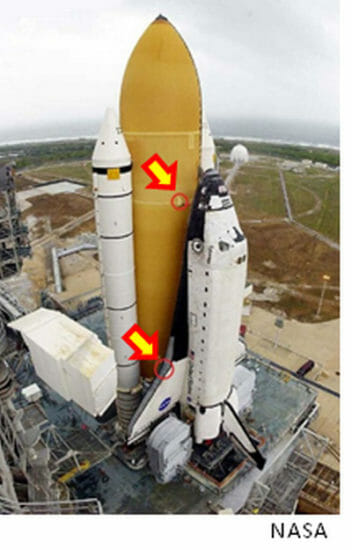
The loss of Space Shuttle Columbia on February 1, 2003, remains one of the most significant engineering and organizational failures in modern technological history. While the physical cause of the disaster was damage to the shuttle’s thermal protection system during launch, the tragedy also revealed deeper issues involving engineering judgment, organizational culture, risk assessment, communication, and ethical decision-making under uncertainty.
The Columbia disaster was not only a technical failure; it was also a case study in engineering ethics, organizational culture, normalization of deviance, and decision-making under uncertainty.
In this webinar, Dr. Astaneh examines not only the technical causes of the Columbia disaster but also the engineering and management decisions that followed launch, when concerns were raised about possible damage to the shuttle’s left wing. The webinar discusses how normalized risk gradually became accepted within the organization, how uncertainty was managed, how engineers’ concerns were filtered through management structures, and how critical decisions shaped the final outcome.
The fatal damage to Columbia occurred during launch, but critical engineering and management decisions made afterward shaped the final outcome. This webinar examines how highly capable engineering organizations can gradually accept increasing risk without fully recognizing the danger.
Using the NSPE Code of Ethics for Engineers as a framework, the webinar examines the meaning of “holding safety paramount” in real engineering practice. The discussion includes topics such as normalization of deviance, groupthink, safety culture, communication of technical risk, and the ethical responsibilities of engineers and engineering managers when safety concerns are present but complete information is unavailable.
The webinar also discusses practical lessons and tools that engineers can apply in their own professional work to recognize warning signs, improve technical and ethical decision-making, and better protect public safety in complex engineering systems.
Main References:
- Code of Ethics of National Society of Professional Engineers (NSPE) (PDF)
- NSPE Ethics Reference Guide (PDF)
- Columbia Accident Investigation Board (CAIB) Report. published by the Government Printing Office, (2003). (PDF)
- Augustine Report - Report of the Advisory Committee On the Future of the U.S. Space Program. December 1990, by NASA, https://ntrs.nasa.gov/citations/19910012869
- The Final Flight of Shuttle Columbia, a book by Michael Cabbage and William Harwood, published by FREE PRESS, 2004.
- Bringing Columbia Home: The Untold Story of a Lost Space Shuttle and Her Crew, by Michael D. Leinbach , Jonathan H. Ward , et al, published by Arcade, 2020.
- The Columbia Disaster: The History of the Last Space Shuttle to Be Lost During a Mission, a book by Charles River Editors (Authors), 2024.
- The Columbia Space Shuttle Disaster: From First Liftoff to Tragic Final Flight (Countdown to Space), a book by Michael D. Cole, published by Enslow Pub Inc, 2003.
- Space Shuttle Decision, 1965-1972 (History of the Space Shuttle, Volume 1), a book by A. Heppenheimer, published by Smithsonian Institution Scholarly Press, 2002.
- Concepts and Cases- Engineering Ethics, a book bBy Charles E. Harris, et al., published by Cengage, 2019.
- Engineering Ethics-Contemporary and Enduring Debates. A book by Deborah G. Johnson, published by Yale University Press, 2020.
- Ethics in Engineering Practice and Research, second edition, a book by Caroline Whitbeck, published by Cambridge University Press, 2011.
- Ethics, Technology, and Engineering, a book by Ibo van de Poel and Lambèr Royakkers, published by Wily-Blackwell, 2011.
- Groupthink, a Study in Self Delusion, a book by Christopher Booker, published by Bloomsbury Continuum, 2020.
- Crucial Decisions-Leadership in Policymaking and Crisis Management, a book by Irving L. Janis, published by FREE PRESS, 1989.
- Moral Issues in Business, 13th, a book by William H. Shaw and Vincent Barry, published by CENGAGE Learning, 2016.
- Decision Making: A Psychological Analysis of Conflict, Choice, and Commitment, a book by Irving L. Janis and Leon Mann, published by FREE PRESS, 1977.
- The Power of Ethical Management, a book by Norman V. Peale and Ken Blanchard, published by William Morrow, 1988.
Date: Wednesday. TBA. 2026. Starts: 2 - 4 pm EDT
Credits: 2 PDH Units
Learning Objectives:
At the successful conclusion of this webinar, you will learn the following knowledge and skills:
- The technical causes of the Shuttle Columbia disaster and how damage to the thermal protection system during launch led to the tragic disintegration during re-entry.
- How engineering decisions made after launch, under conditions of uncertainty and incomplete information, influenced the final outcome of the mission.
- How normalization of deviance can gradually lead highly capable engineering organizations to accept increasing levels of risk without fully recognizing the danger.
- How organizational structure, communication processes, and management culture can affect the ability to properly evaluate and act on engineers' safety concerns.
- The meaning and practical application of the NSPE Code of Ethics requirement that engineers “hold paramount the safety, health, and welfare of the public.”
- How concepts such as groupthink, risk communication, and safety culture can influence ethical and technical decision-making in complex engineering systems.
- Practical lessons and tools that engineers and engineering managers can apply in their own professional practice to recognize warning signs, improve ethical decision-making, and better protect public safety.
Special Webinar Instructions
After payment, please visit this webinar page, click "Start Course" and fill out the Webinar Registration Form. You'll receive email notification and details on how to join the webinar. You will then be able to access the webinar slides, test your system and receive webinar reminders. After completing the webinar requirements, your certificate of completion will be saved and available for download in your profile.
We value your feedback! Please rate this webinar after completion.
Group Discounts Available
Biography
Abolhassan Astaneh-Asl, Ph.D., P.E.
Dr. Abolhassan Astaneh is a professor emeritus of civil and environmental engineering at the University of California, Berkeley, and a 2013 Minner Faculty Fellow in Engineering Ethics and Social/Professional Responsibility in the College of Engineering. He is the winner of the 1998 T.R. Higgins Lectureship Award of the American Institute of Steel Construction, the most prestigious award in his field. He is a licensed civil engineering Professional Engineer (P.E.) in California. Dr. Astaneh is currently a structural engineering and bridge engineering consultant, an expert witness in several court cases, continues his research and publication and gives lectures and seminars in structural engineering, earthquake engineering, and engineering ethics. He has published more than 300 journal papers, conference proceedings papers, technical reports, book chapters and has had hundreds of press interviews on technical aspects of subjects in his areas of interest.
His research and expertise are in structural analysis, design, earthquake engineering of steel, steel-concrete, concrete and wood buildings and bridges, failure analysis of buildings, bridges and other structures, blast protection of structures, and protection of buildings, bridges, and other structures against terrorist attacks. He has designed, constructed, and done extensive research and studies of buildings and bridges since 1968 for 58 years, including buildings of up to 73 stories and long-span bridges such as the Golden Gate Bridge and the Bay Bridge. Dr. Astaneh has performed the failure analysis of several collapsed structures, including the World Trade Center Towers and the Florida Pedestrian Bridge. Both cases involved engineers not abiding by the first canon of engineering ethics that is: engineers should hold safety paramount.









This course provided a good overview of the shuttle disaster.
Excellent course and presentation
Excellent presentation. Had seen others about the Challenger disaster, but never about Columbia.
Well done and well presented